
Quick Answer
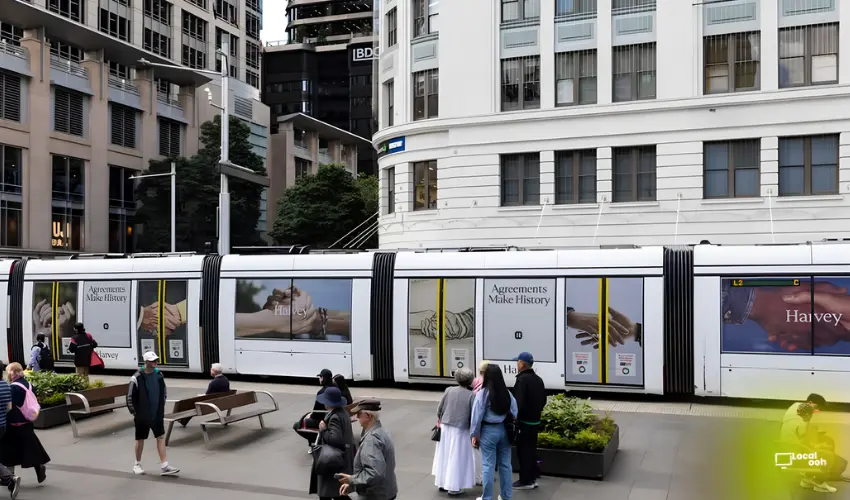
Harvey is rolling out a major multi-country brand campaign built around the line “Agreements Make History.” The supplied visuals show the campaign expanding across airport and transit environments, Times Square-scale media, roadside billboards, street furniture, transit wraps, wallscapes and multi-screen digital networks. A consistent visual language of handshakes, clasped hands and human connection gives the campaign a recognizable identity across very different OOH formats.
Local OOH: Harvey Turns “Agreements Make History” Into a Global Outdoor Brand Platform
Harvey is taking a historic brand campaign across multiple countries with a simple, highly visual idea: “Agreements Make History.”
The supplied campaign imagery shows the platform appearing across a wide range of public environments, including large digital displays, major urban billboards, street furniture, transit wraps, wallscapes and multi-screen networks.
Rather than changing its story from format to format, Harvey keeps one recognizable visual language at the center of the campaign: hands coming together.
For technology, professional-services and B2B brands looking to build a similarly consistent public presence, Local OOH can help plan billboards, DOOH, transit media and high-impact city takeovers around audience, market and brand visibility.
“Agreements Make History” Uses a Universal Human Gesture
The campaign’s strength begins with the simplicity of its visual idea.
Across the supplied executions, Harvey repeatedly uses handshakes, clasped hands and gestures of agreement to communicate connection without requiring a complicated explanation.
That gives the work a timeless, editorial quality while allowing the headline “Agreements Make History” to carry the brand message.
Times Square Shows How the Platform Scales Across Multiple Surfaces
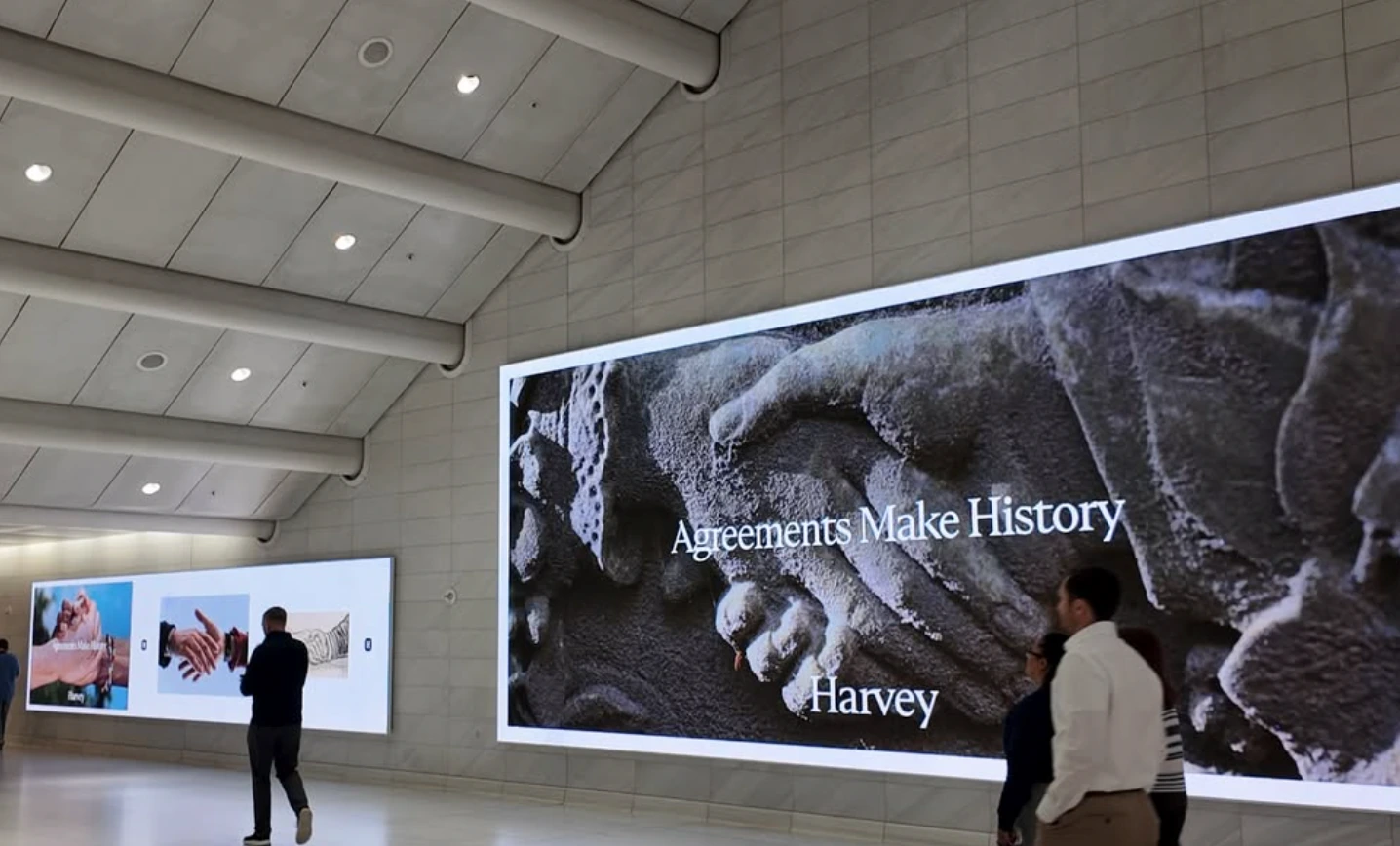
One of the supplied visuals shows Harvey appearing across several high-impact screens within the same dense urban environment.
The campaign moves between photography, white space and black brand panels while keeping the same central idea intact.
This kind of coordinated presence makes the brand feel larger than a single billboard because several surfaces work together as one visual system.
Roadside Billboards Keep the Message Simple and Monumental
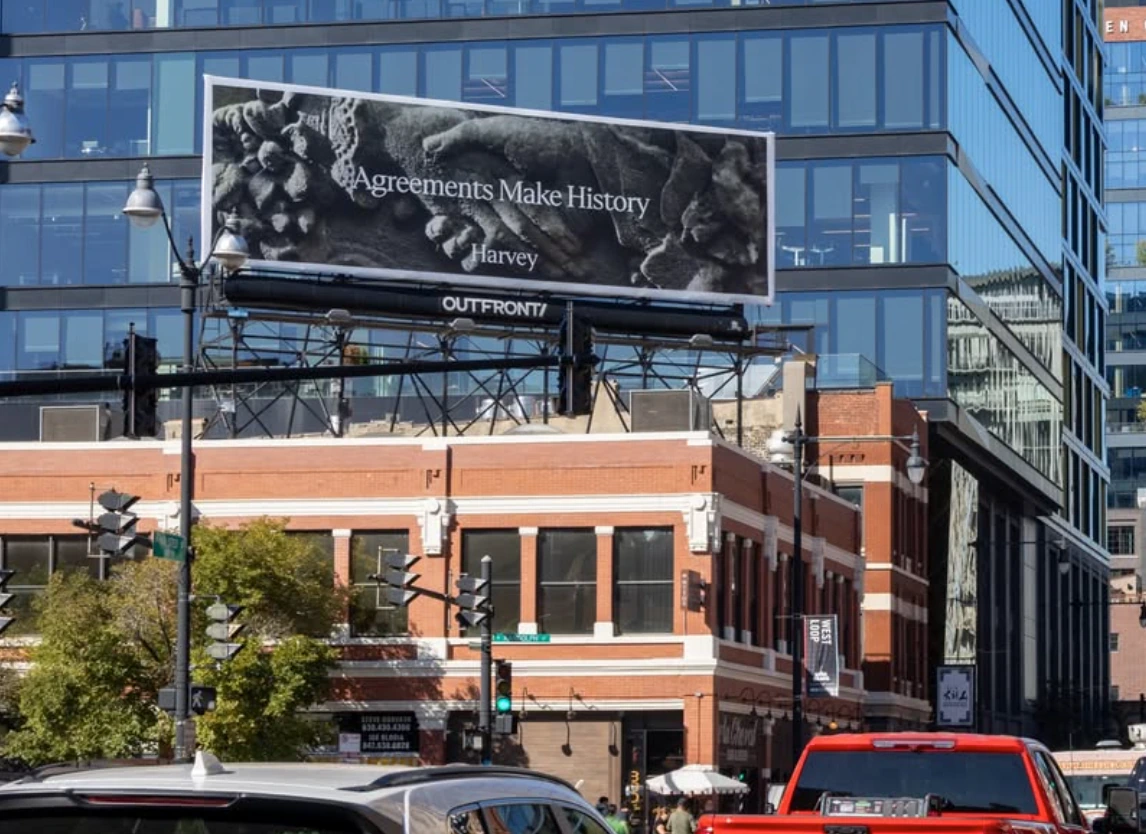
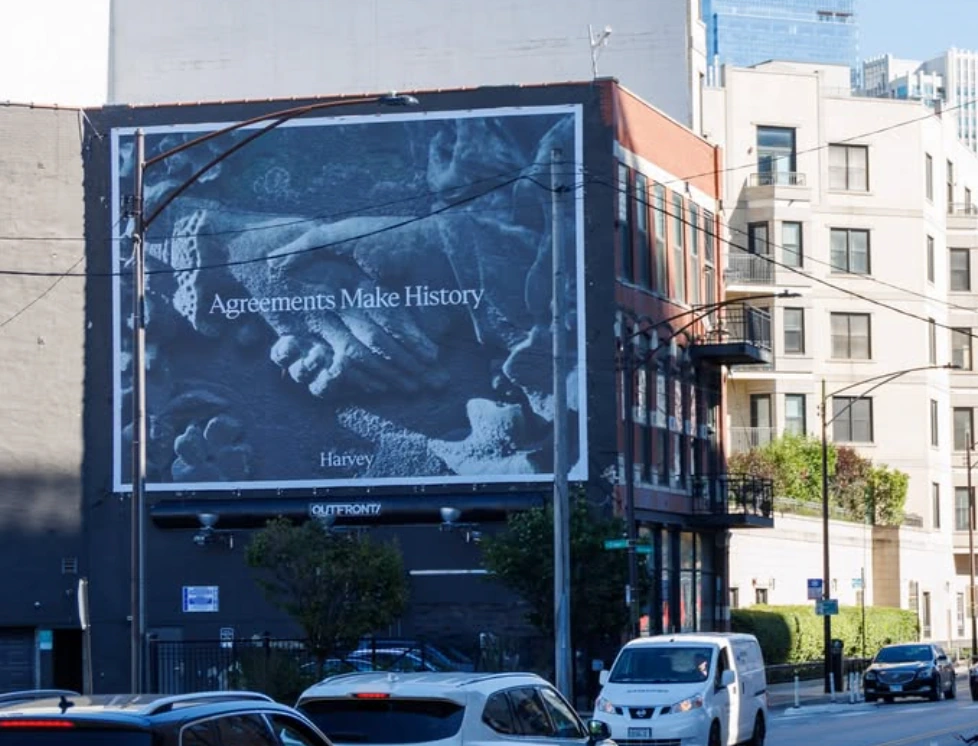
On a conventional billboard, the creative becomes even more stripped back.
A black-and-white image of hands fills the frame, while the headline and Harvey name remain minimal.
That restraint works especially well in roadside OOH, where a clear image and short line need to communicate quickly.
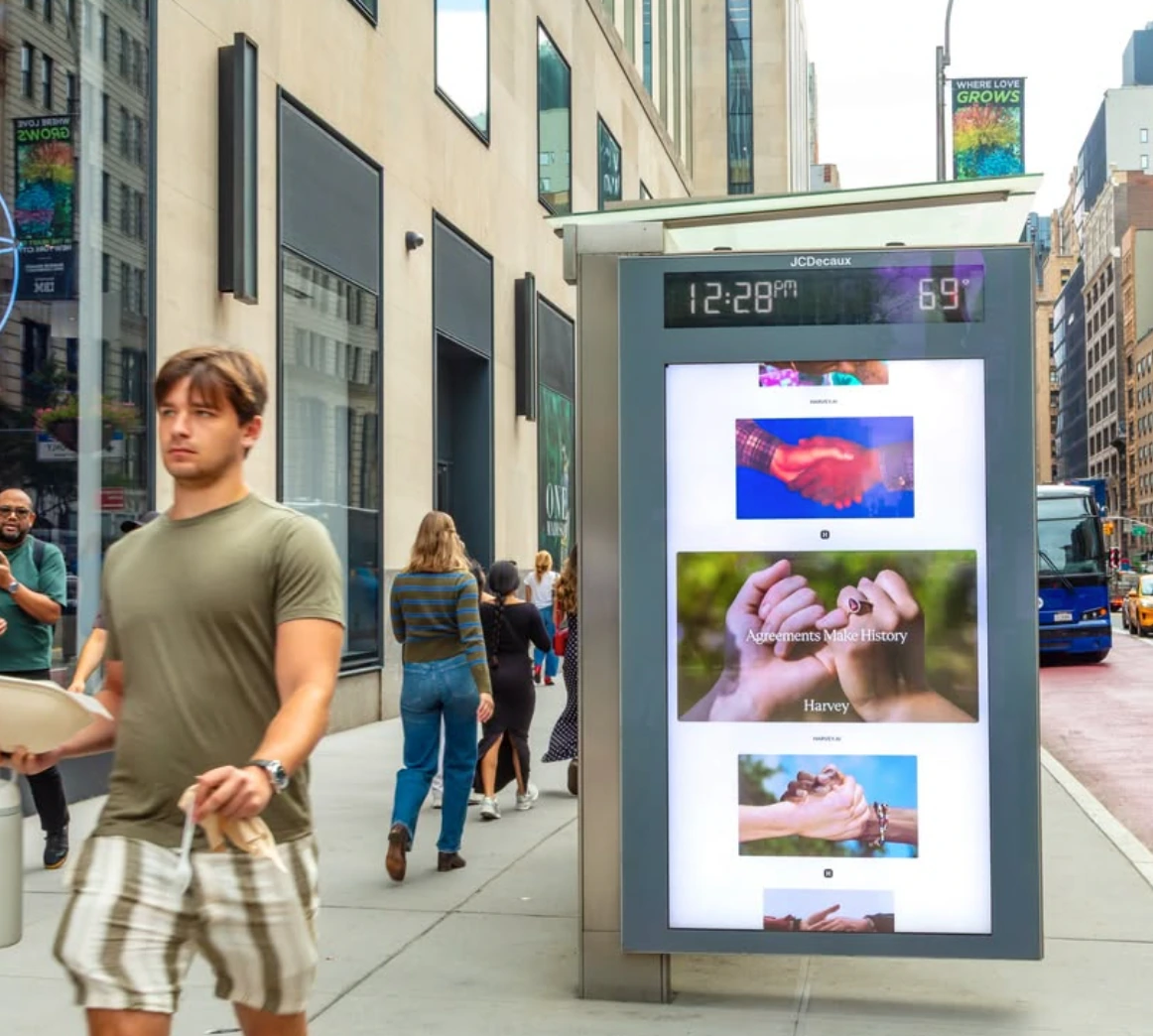
Street Furniture Turns the Campaign Into an Editorial Sequence
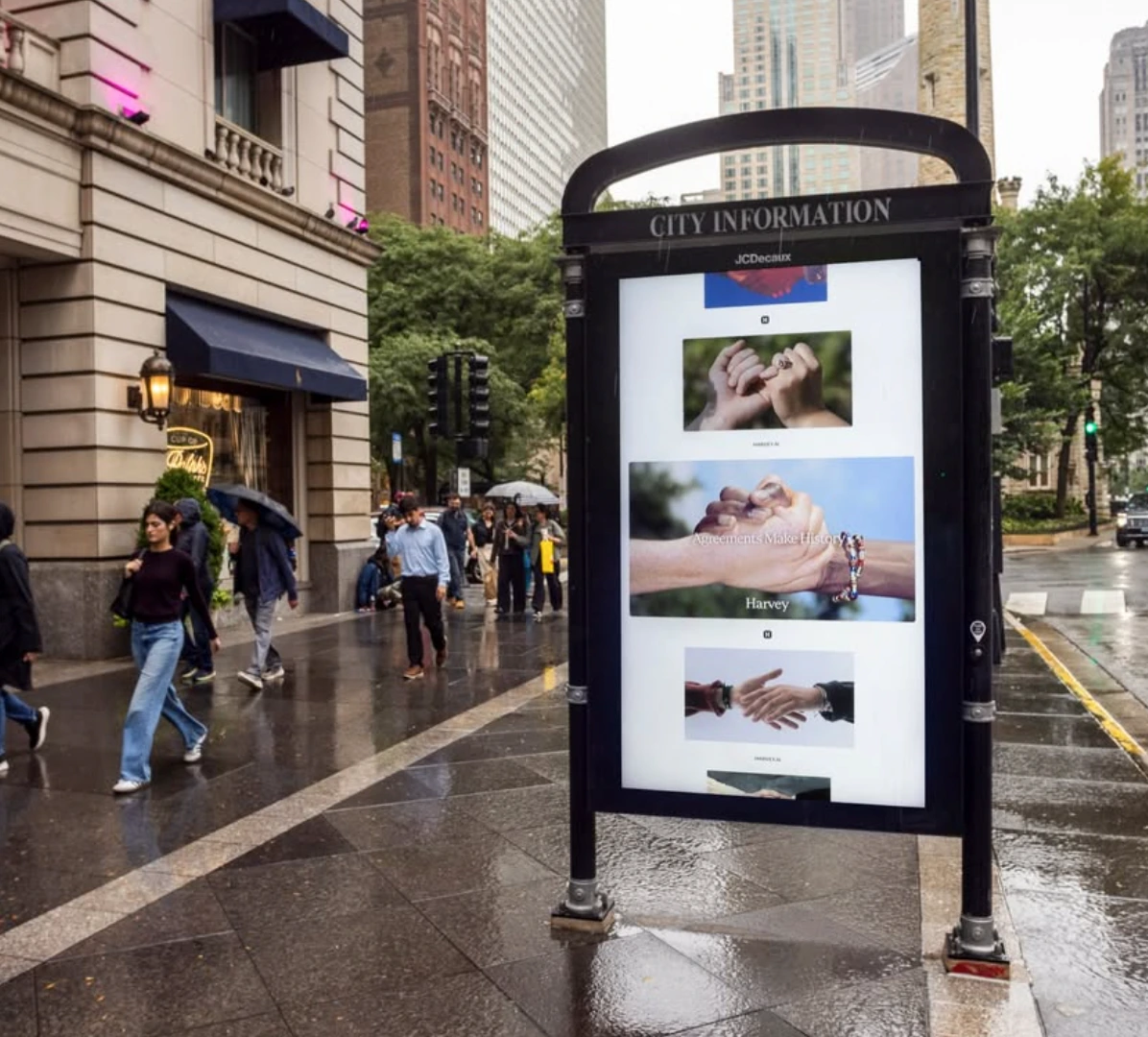
The supplied street-furniture creative uses a vertically scrolling layout that resembles a digital editorial feed.
Different images of handshakes and clasped hands appear one after another, giving passersby several variations of the same brand idea.
This format allows the campaign to feel more exploratory while remaining recognizable through the recurring visual theme.
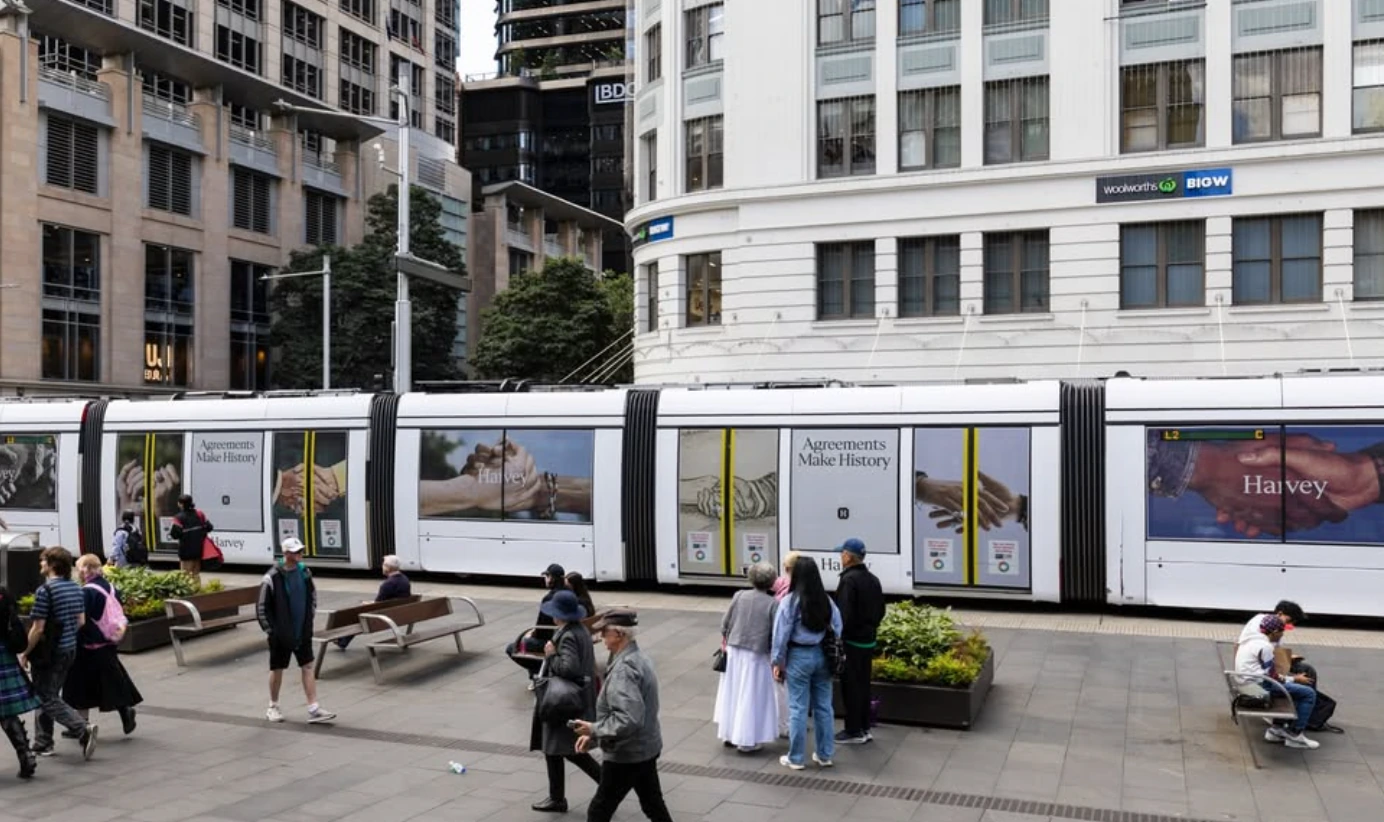
Transit Advertising Turns Moving Infrastructure Into Brand Media
The campaign also moves beyond stationary formats.
The supplied transit execution wraps a long vehicle with a series of agreement images and Harvey branding, extending the campaign across a much wider horizontal canvas.
Because the vehicle travels through the city, the message gains mobility as well as scale.
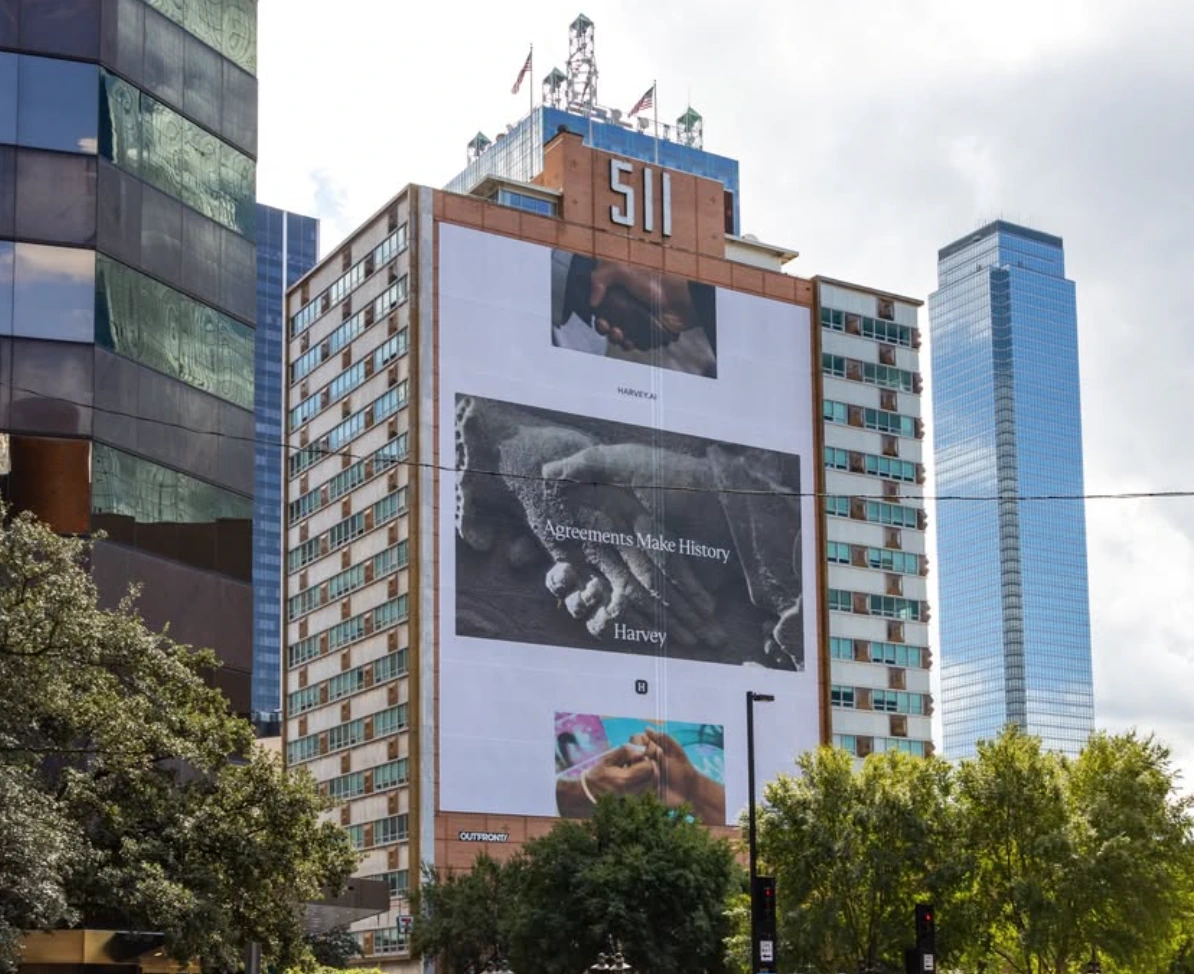
Building-Scale Media Gives Harvey a Landmark Presence
The platform also appears on large building surfaces where the campaign can become part of the city skyline.
In the supplied execution, several pieces of Harvey creative are arranged vertically across a tall façade, including the recurring black-and-white agreement image.
This scale changes the role of the campaign from an ad into a temporary urban landmark.
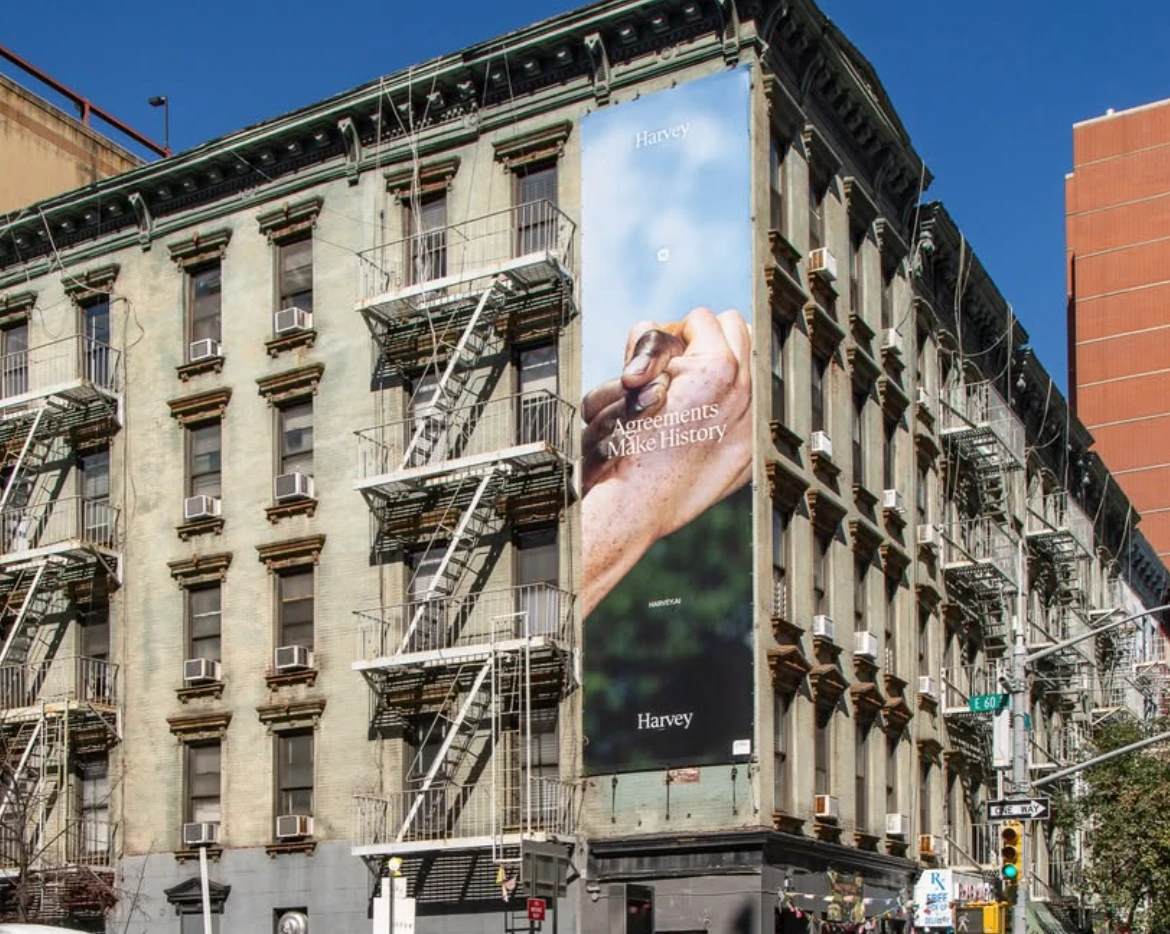
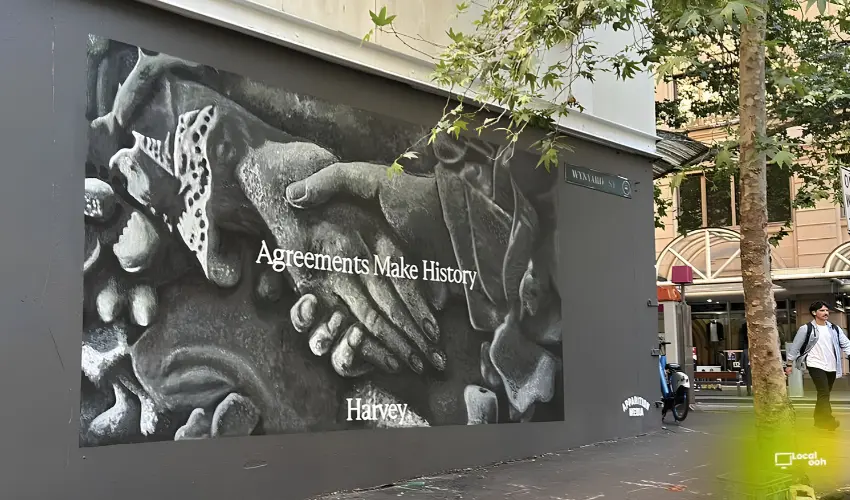
A Vertical Wallscape Turns a Handshake Into an Architectural Graphic
A separate vertical execution shows how the same photography can adapt to a narrow façade.
The hands fill the full height of the placement, while the campaign line sits directly over the image.
The result feels less like a conventional rectangular billboard and more like a piece of visual architecture.
Digital City Panels Add Another Layer of Frequency
Smaller digital panels give Harvey a closer, repeated presence at street level.
The supplied execution again uses multiple agreement images inside a clean white interface, making the campaign feel consistent with the more editorial pieces seen elsewhere.
This kind of street furniture helps connect large spectacular placements with everyday pedestrian movement.
Multi-Screen Networks Make the Campaign Feel Like a Visual Series
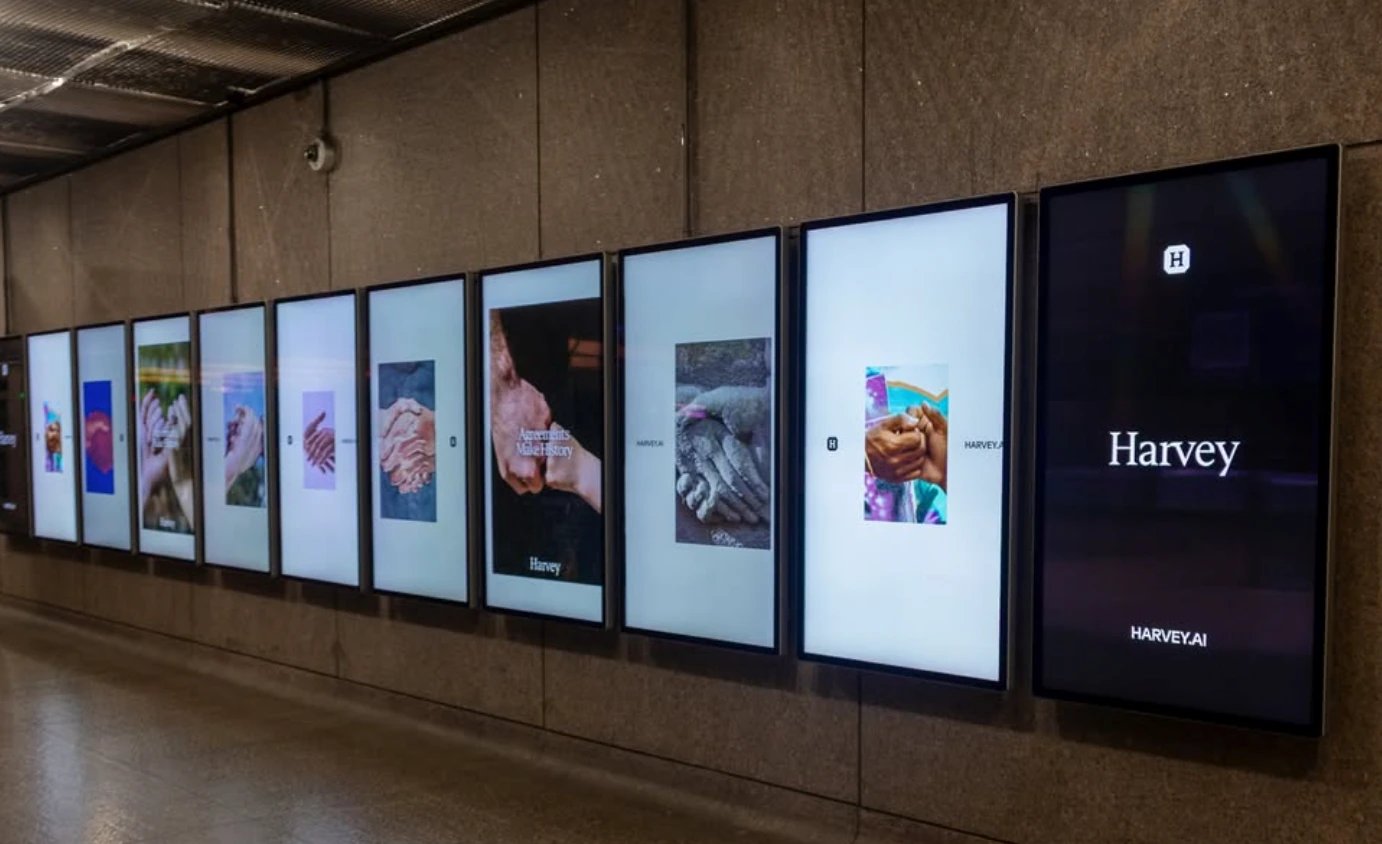
In another supplied indoor execution, a row of digital screens presents different hand images across the same environment.
This creates a sequence rather than a single static message, allowing the campaign to build rhythm and repetition as people move past the displays.
The final Harvey brand panel anchors the series and helps the visual system resolve clearly.
The Same Visual System Works Across Different Cities
A final supplied billboard reinforces the flexibility of the campaign.
The black-and-white image, serif typography and Harvey wordmark remain consistent even as the physical environment changes.
That continuity is important for a multi-country rollout because it allows each market to feel part of the same global brand moment.
Why Harvey’s “Agreements Make History” OOH Campaign Stands Out
- The idea is universal. Hands and handshakes communicate agreement without needing heavy explanation.
- The visual system is flexible. The same creative language works on billboards, transit, street furniture, wallscapes and digital networks.
- The branding is restrained. Minimal typography and simple imagery give the campaign a premium editorial feel.
- The rollout creates repetition. Multiple formats and markets reinforce the same message instead of fragmenting the campaign.
- The work scales from intimate to monumental. A close-up of hands can work on a street panel and still remain powerful on a building-sized placement.
What Global Brands Can Learn From This OOH Approach
The campaign shows that a multi-country OOH strategy does not need a different creative idea for every market.
A strong central platform can stay recognizable while adapting to local media formats, city architecture and different audience journeys.
For brands planning a multi-market launch, Local OOH can help plan campaigns across billboards, DOOH, transit and high-impact urban formats.
Build Your Next Multi-Market OOH Campaign With Local OOH
If your brand is preparing a global launch, major brand platform or coordinated city takeover, Local OOH can help plan and quote your next OOH campaign.
The right visual system can stay consistent across countries while still adapting to the streets, buildings and transit environments of each market.
Summary
Harvey’s “Agreements Make History” campaign turns a simple human gesture into a scalable global brand system. The creative repeatedly uses hands, handshakes and moments of agreement as the central visual idea, allowing the same message to work across digital spectaculars, transit media, street furniture, large-format billboards and building-scale placements. The multi-country rollout shows how one strong visual platform can create continuity while adapting to very different urban environments.
Sources
Campaign information and visuals were supplied for this article. The supplied message describes Harvey’s work as a historic brand campaign rolling out across multiple countries. The supplied visuals repeatedly use the line “Agreements Make History” and show the campaign across large digital concourses, Times Square-style spectaculars, roadside billboards, street furniture, transit wraps, building-scale wallscapes and multi-screen digital networks. No verified reach, impressions, media spend or campaign-performance figures were supplied.
FAQs
What is the central message of Harvey’s campaign?
The supplied visuals repeatedly use the line “Agreements Make History.”
Is the campaign running in more than one country?
Yes. The supplied campaign note describes it as a historic brand campaign hitting multiple countries.
Which OOH formats appear in the supplied visuals?
The visuals show digital spectaculars, roadside billboards, street furniture, transit wraps, building-scale wallscapes and multi-screen digital networks.
What visual device connects the campaign?
The campaign repeatedly uses hands, handshakes and clasped hands as a visual representation of agreements and human connection.
Why does the campaign translate well to OOH?
The central image is simple, the headline is short and the same idea can scale from small street panels to monumental building-sized formats.



Comments (0)
Join the conversation. Keep it respectful and on-topic.