
Quick Answer
QualiArts and COVER Corporation are expanding the “holodori Takeover,” a global OOH and DOOH campaign for hololive Dreams, across Osaka, Taipei, Seoul, Jakarta, Los Angeles, New York and Tokyo. The activation uses transit advertising, 3D billboards, giant LED screens, digital out-of-home and city-specific creative to turn the game launch into a multi-market outdoor media experience.
Build Global OOH Advertising Campaigns With Local OOH
Large entertainment launches can feel more powerful when they move beyond digital feeds and appear in the physical environments where audiences already spend time. OOH Advertising, Digital Out-of-Home and Transit Advertising can help a campaign become part of the city itself. Local OOH can help brands plan digital billboards, transit media, 3D billboard advertising and high-impact outdoor activations across major markets.
From DOOH Advertising and Digital Signage to Times Square Advertising, train wraps and large-format Outdoor Media, the right mix of formats can give one campaign a different local expression in every city.
Planning a global OOH Campaign? Start building your campaign with Local OOH.
hololive Dreams Launches a Seven-City Global OOH Campaign
QualiArts and COVER Corporation are taking hololive Dreams, also known as holodori, into public spaces around the world with the “holodori Takeover.”
The large-scale campaign spans Osaka, Taipei, Seoul, Jakarta, Los Angeles, New York and Tokyo, using a mix of Out-of-Home Advertising, video content, giant screens and city-specific activations.
Instead of repeating one identical visual everywhere, the campaign adapts to each market. Different cities receive exclusive messages, character appearances, 3D billboard visuals and transit executions, giving the global rollout a more localized feel.
That makes the campaign a strong OOH Case Study in how entertainment brands can use physical media to create a consistent global idea without making every market look the same.
Tokyo Transit Advertising Turns the Yamanote Line Into holodori Media
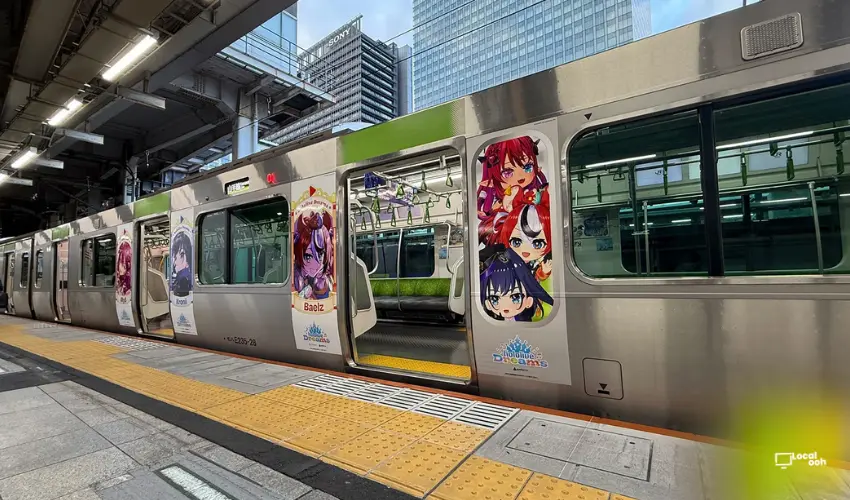
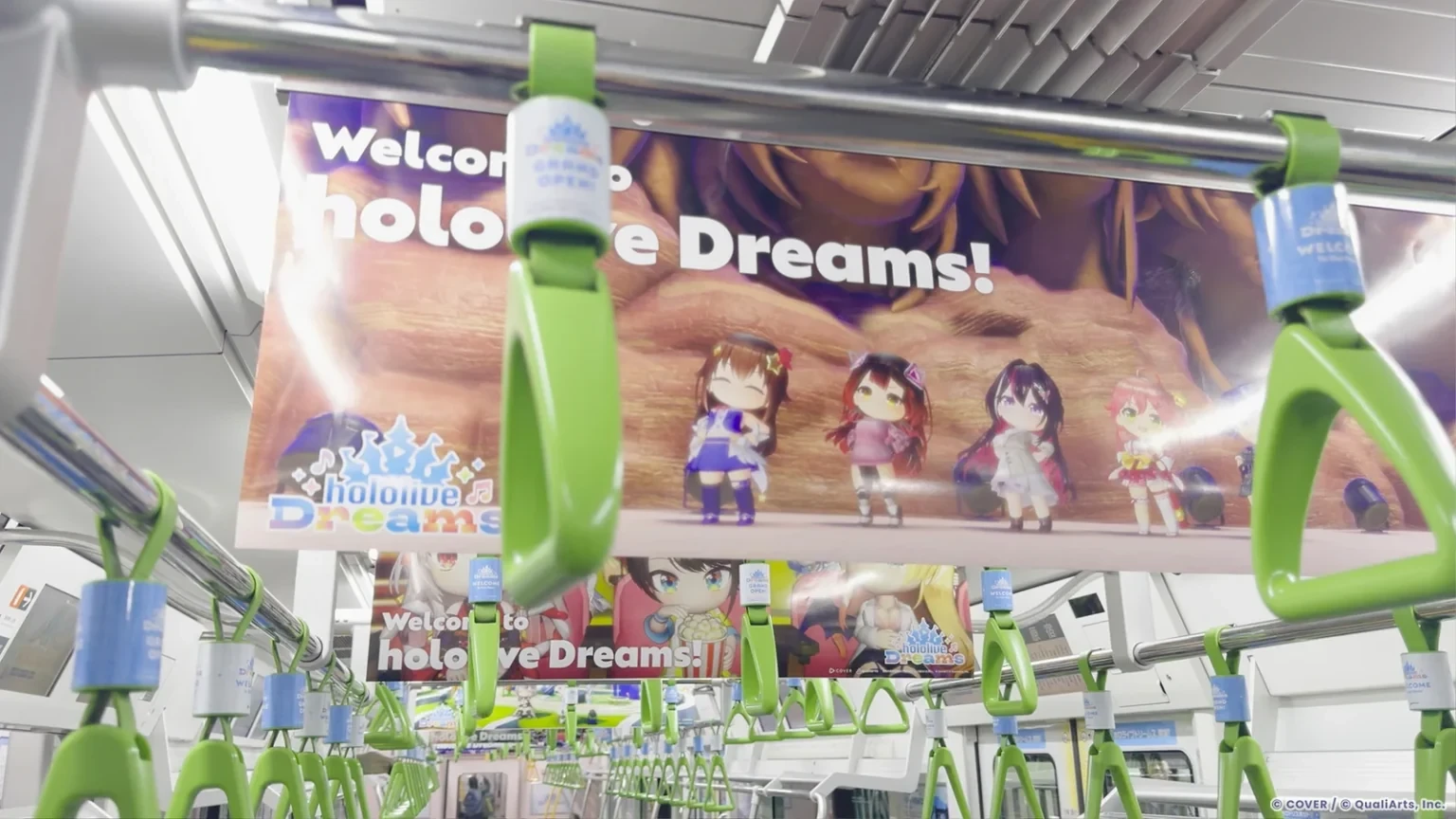
In Tokyo, the campaign includes a special Yamanote Line train activation running from September 18 through October 2, 2026.
The holodori creative appears across the train experience, with branded designs on the exterior and game-related content inside the carriages. That gives the campaign repeated exposure during everyday travel rather than limiting it to a single fixed billboard.
This kind of Transit Advertising gives the game a highly visible presence across one of Tokyo’s most recognizable transport systems while also allowing passengers to experience the creative up close.
Shinjuku 3D Billboard Advertising Adds a High-Impact DOOH Moment
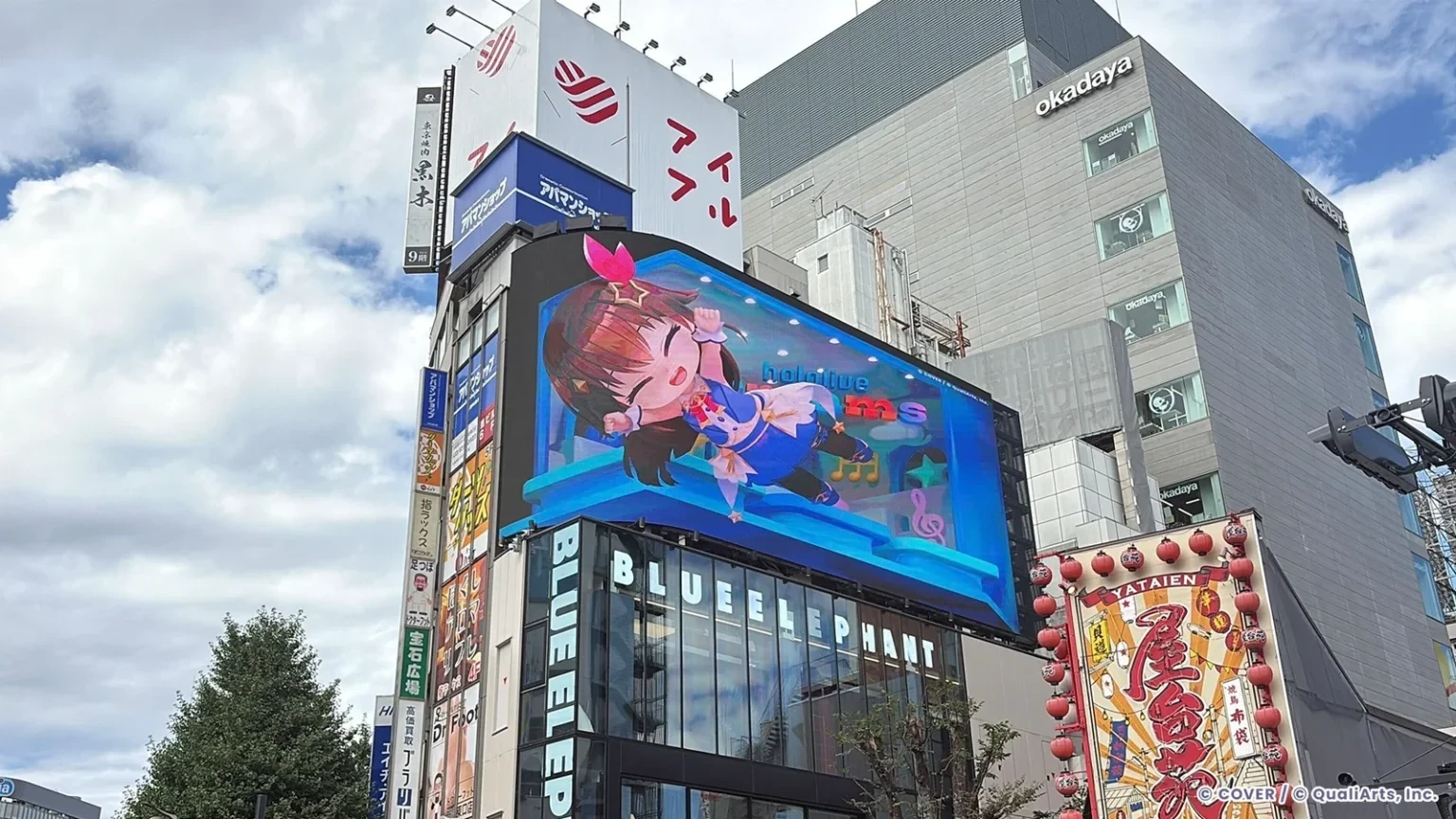
Tokyo’s rollout also includes a 3D billboard visual of Tokino Sora at Cross Shinjuku Vision, one of the city’s best-known giant digital displays.
The visual is supported by a special voice message, combining 3D Billboards, sound and giant-screen media to create a more immersive city-center experience.
This execution shows how Creative DOOH can make a game character feel larger than the screen itself. The format is especially effective for animated and virtual talent because the illusion of depth helps the character feel physically present in the surrounding city.
Explore 3D billboard and Digital Out-of-Home opportunities with Local OOH
Seoul Uses Giant DOOH Screens and 3D Billboard Visuals
In Seoul, the holodori Takeover runs across the giant K-POP SQUARE screen in Gangnam, with a 3D billboard visual featuring Otonose Kanade added from September 22.
The combination of scale, motion and character-led creative makes the execution a natural fit for DOOH Media in one of Seoul’s busiest entertainment districts.
By using a location already associated with large digital displays and pop culture, the campaign benefits from strong Location-Based Advertising rather than treating the media screen as a neutral surface.
Los Angeles Extends the DOOH Campaign With a Mori Calliope 3D Billboard
In Los Angeles, a 3D billboard visual featuring Mori Calliope appears on The Moxy Spectacular near the Los Angeles Convention Center.
The location gives the campaign a prominent Outdoor Advertising presence in a high-traffic entertainment area while keeping the character-focused creative consistent with the broader global rollout.
The use of a dedicated 3D visual also demonstrates how Innovative Billboard Advertising can help entertainment brands create unique city-specific executions without changing the core campaign identity.
Times Square Advertising Brings holodori to New York
In New York, holodori appears across Times Square, one of the world’s most recognizable environments for Digital Billboards and large-scale DOOH Advertising.
Special messages from hololive talents appear alongside videos featuring Mini holomems, giving the New York activation its own creative treatment rather than simply duplicating the Tokyo or Seoul execution.
Times Square gives the campaign global visibility and makes the takeover feel like a major entertainment launch. It also reinforces the campaign’s strategy of pairing localized content with globally recognizable OOH locations.
Jakarta Uses LED Billboard Advertising to Feature Nine hololive Talents
At LED Ratu Plaza in Jakarta, the campaign features all hololive Indonesia talents across different scheduled periods.
ID 1st Generation, ID 2nd Generation and ID 3rd Generation each receive dedicated video periods, allowing the Digital Outdoor Screens to support a rotating content strategy instead of one static creative.
This gives the campaign an example of Dynamic DOOH thinking, where the media space can evolve over time and give different talent groups dedicated visibility.
Osaka and Taipei Extend the Global OOH Media Strategy
The “holodori Takeover” began with large-scale advertising across Osaka and Taipei from September 7 through September 13.
In Osaka, exclusive music videos and holodori visuals appeared across digital screens in Umeda, Namba and Shinsaibashi, giving each area different creative content.
In Taipei, holodori videos ran for three hours each day on a large LED screen in Ximending, alongside exclusive messages from 12 hololive talents.
These executions show how a single OOH Marketing platform can be adapted through media format, location and content scheduling while still remaining recognizable as part of the same global campaign.
Why the holodori Takeover Works as a Global OOH Case Study
The campaign succeeds because it does not rely on only one type of outdoor format. Instead, it combines Transit Advertising, 3D Billboards, giant LED screens, Digital Signage and city-specific creative.
That variety allows each market to receive an execution suited to its own media environment. Tokyo can use rail media and Shinjuku screens, Seoul can emphasize Gangnam DOOH, and New York can use Times Square Advertising.
The campaign therefore feels global without becoming generic. The game, characters and visual identity remain consistent, but the OOH Media changes to fit the city.
What Brands Can Learn From the holodori Global OOH Campaign
- Localize the media, not just the language. Different cities can use different OOH formats while still supporting one global campaign platform.
- Use Transit Advertising for repeated daily exposure. Train media can surround commuters with campaign content across multiple touchpoints.
- Use 3D Billboards where character motion matters. Animated entertainment properties can benefit from DOOH formats that create depth and spectacle.
- Choose iconic digital locations. Times Square, Shinjuku and Gangnam add cultural weight to the campaign.
- Rotate content across Digital Outdoor Screens. Different talent groups and messages can keep a long-running DOOH campaign fresh.
- Build one global OOH idea with multiple local expressions. Consistency does not require identical creative in every city.
Final Reflection: hololive Dreams Turns OOH Advertising Into a Global Game Launch
The “holodori Takeover” demonstrates how OOH Advertising and Digital Out-of-Home can give a game launch physical presence across multiple countries at the same time.
By combining train media, 3D Billboard Advertising, giant screens, Times Square Advertising and localized video content, QualiArts and COVER Corporation create a campaign that feels both globally connected and locally specific.
For gaming and entertainment brands, the campaign offers a strong example of Creative DOOH: let the core brand remain consistent, then use the strengths of each city’s outdoor media landscape to make the experience feel unique.
Summary
The “holodori Takeover” brings hololive Dreams into seven cities through a mix of transit advertising, train wraps, 3D billboard visuals, giant digital screens and localized special messages. In Tokyo, the campaign includes Yamanote Line advertising and a 3D Tokino Sora execution at Cross Shinjuku Vision. Seoul features Otonose Kanade at K-POP SQUARE, Los Angeles runs a Mori Calliope 3D billboard near the Convention Center, New York activates Times Square, Jakarta uses LED Ratu Plaza, and Osaka and Taipei feature large-scale digital OOH. The result is a global OOH campaign designed to make the game feel locally present in each market.
Sources
Campaign information and visuals were supplied for this article. No independently verified campaign reach, impression or performance figures were supplied.
FAQs
What is the holodori Takeover?
It is a global OOH and DOOH campaign for hololive Dreams spanning seven cities with train advertising, 3D billboards, giant digital screens and localized special content.
Which cities are part of the campaign?
The campaign runs across Osaka, Taipei, Seoul, Jakarta, Los Angeles, New York and Tokyo.
What outdoor formats are used?
The campaign uses transit advertising, train wraps, 3D billboard visuals, giant LED screens, Times Square digital billboards and other city-specific digital out-of-home placements.
What is happening in Tokyo?
Tokyo features a holodori Yamanote Line train activation and a 3D Tokino Sora billboard visual at Cross Shinjuku Vision.
Why is this a useful OOH case study?
It demonstrates how one global entertainment campaign can use different outdoor formats and localized creative in each city while maintaining a consistent overall identity.

Comments (0)
Join the conversation. Keep it respectful and on-topic.