
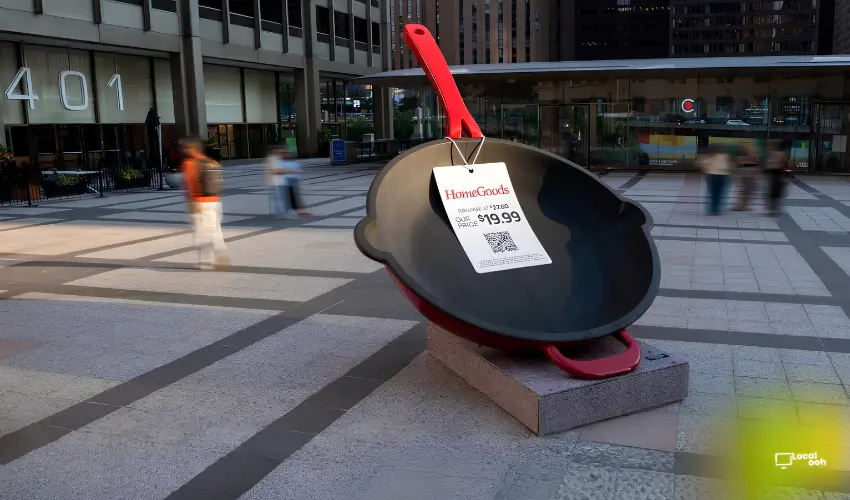
Quick insight: HomeGoods is taking everyday home products out of their usual context and turning them into larger-than-life installations in the middle of Chicago.
Home Products Become OOH
HomeGoods has launched its latest campaign with creative agency Fallon, bringing the unexpected spirit of its stores into a physical experience that consumers can see, photograph and interact with.
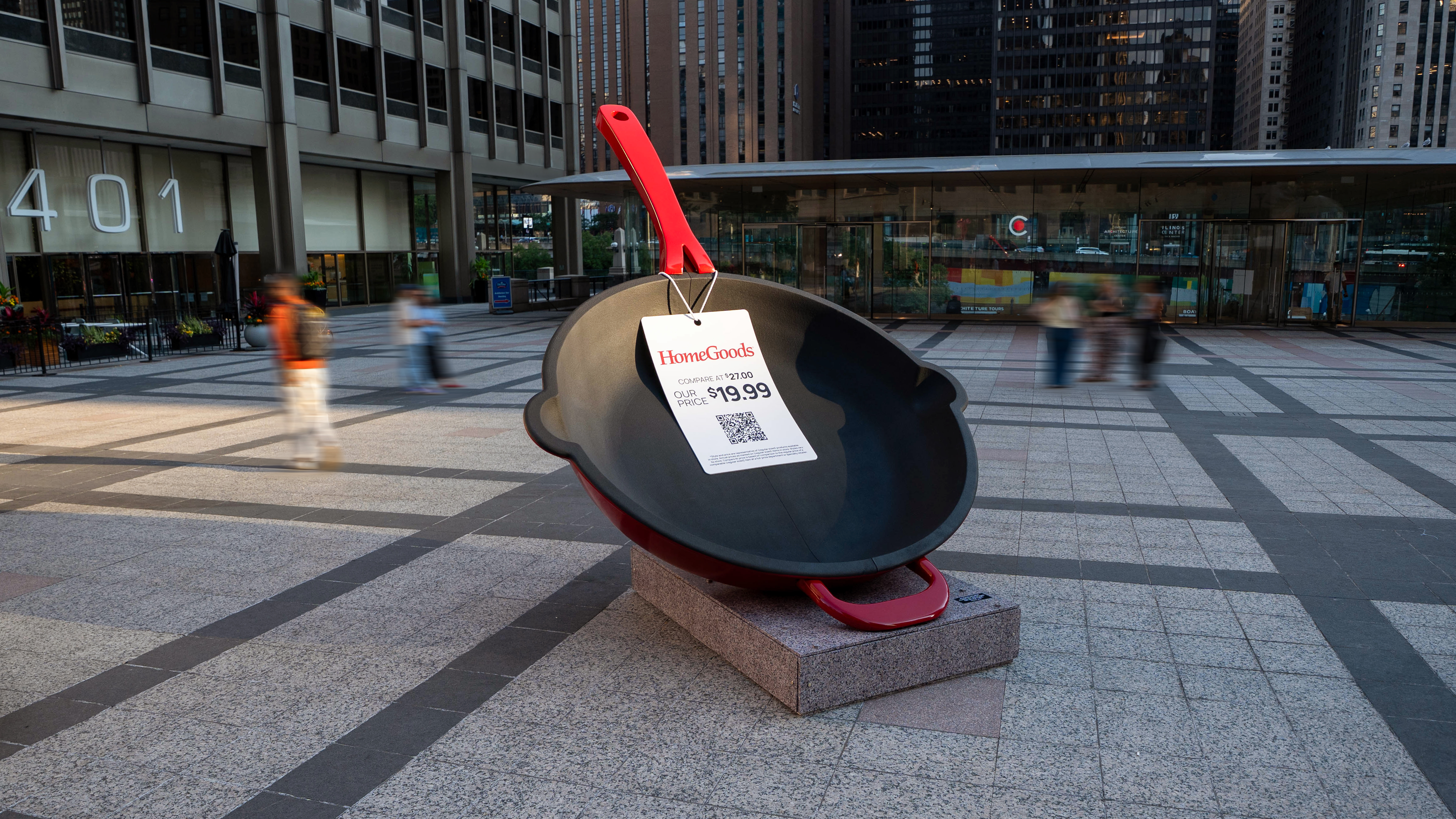
Taking place at Pioneer Court in Chicago from September 9–13, the activation transforms familiar home products into visually striking, oversized installations.
The idea takes something normally associated with the inside of a home and gives it a completely different scale and context.
Instead of simply showing consumers what they might find inside a HomeGoods store, the campaign puts those discoveries directly into the urban environment.
The result is an experience designed to interrupt the everyday rhythm of the city and give people a reason to stop, look and participate.
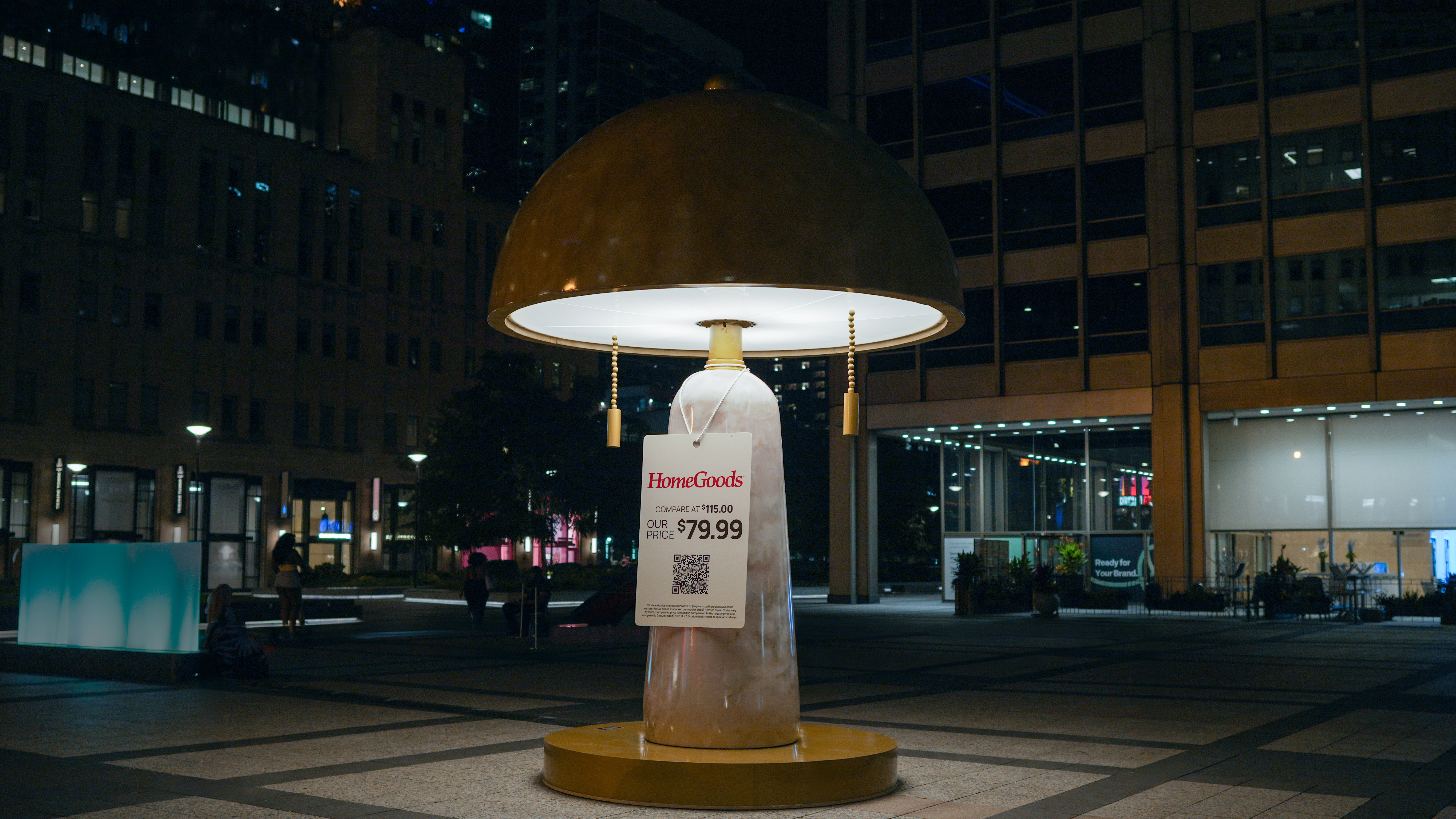
Bringing "Never Shop The Same" To Life
The activation extends HomeGoods' "Never Shop the Same" platform beyond the store.
The brand's positioning is built around the idea that every visit can bring something different, unexpected or difficult to predict.
The Chicago installation translates that idea into a physical experience.
By enlarging everyday products and placing them in a highly visible public setting, HomeGoods turns the variety found inside its stores into something people can experience outside them.
The campaign celebrates the variety, choice and range of styles that make each HomeGoods visit different.
Rather than relying only on traditional advertising, the brand creates an environment that becomes part of the conversation itself.
An Activation Designed For Participation
The installations are not simply visual objects.
They are designed to encourage people to interact with the campaign.
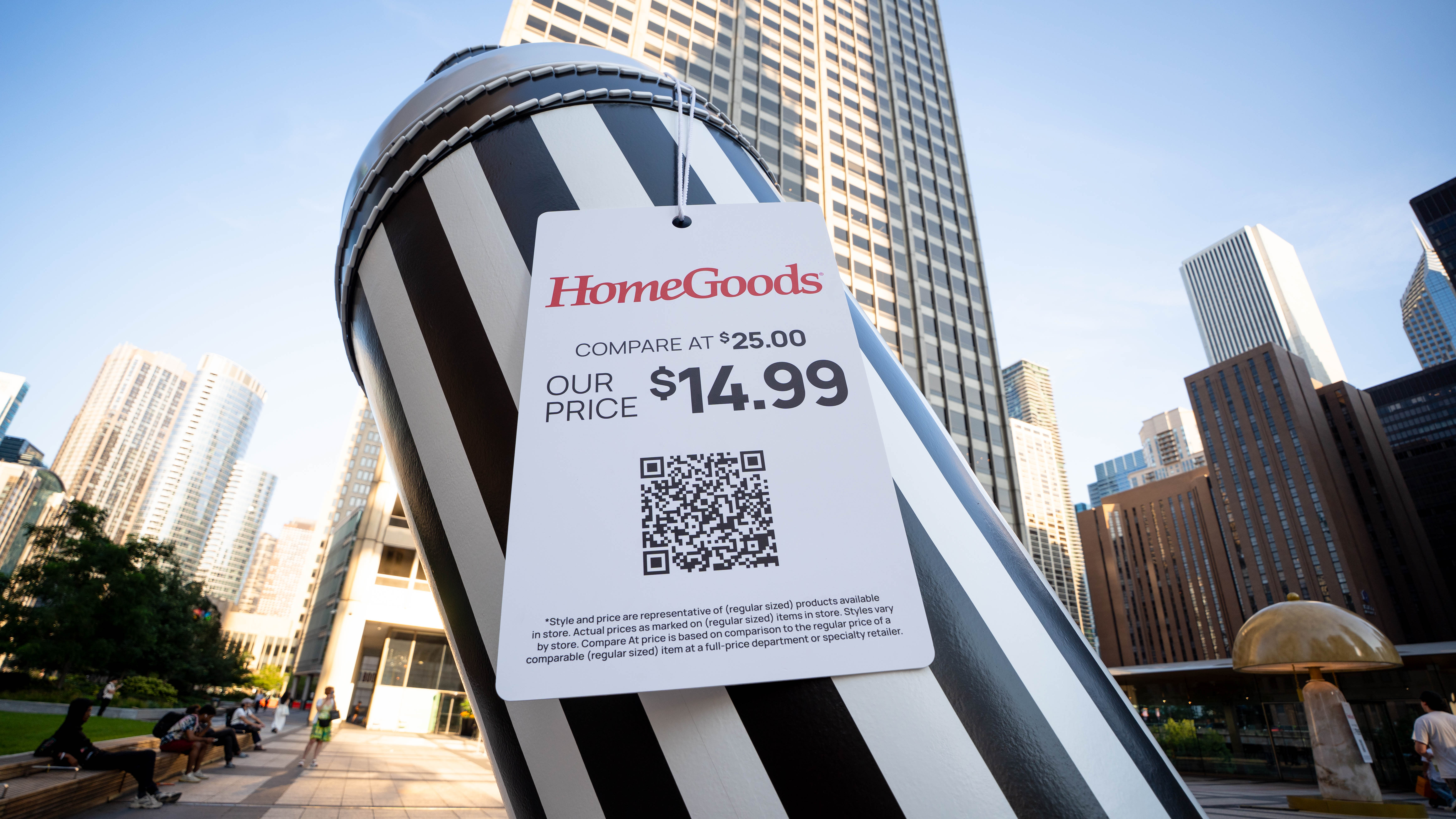
Visitors approaching each installation will notice a signature HomeGoods tag suspended from the oversized item.
Instead of a traditional barcode, the tag features a QR code that visitors can scan with their mobile device.
The QR code directs visitors to a dedicated landing page where they can learn more about HomeGoods and receive a $5 Lyft discount code.
The incentive is designed to extend the physical activation beyond Pioneer Court and encourage consumers to continue the experience at a nearby HomeGoods store.
From Street Experience To Store Visit
One of the most interesting elements of the campaign is the connection between the outdoor experience and the retail environment.
The activation does not end when consumers interact with the oversized installations.
The QR experience creates a direct path from physical OOH engagement to a HomeGoods store visit.
Visitors can receive a Lyft discount that helps them travel to a nearby location, effectively turning the campaign into a bridge between awareness and retail action.
This creates a simple customer journey:
See it. Interact with it. Scan it. Visit the store.
For an experiential campaign, that connection gives the physical installation a clear purpose beyond generating attention.
Making The Unexpected Visible
HomeGoods' retail proposition is closely connected to discovery.
Consumers do not necessarily know exactly what they will find when they walk into a store.
The campaign brings that sense of discovery into the streets.
Oversized home products create an immediate visual contrast with the surrounding urban environment.
A product that would normally be seen inside a living room, bedroom or kitchen suddenly becomes a large-scale public installation.
That unexpected change in scale makes the campaign naturally suited to an environment where people can stop, photograph the work and share their experience.
The surprise becomes part of the media value.
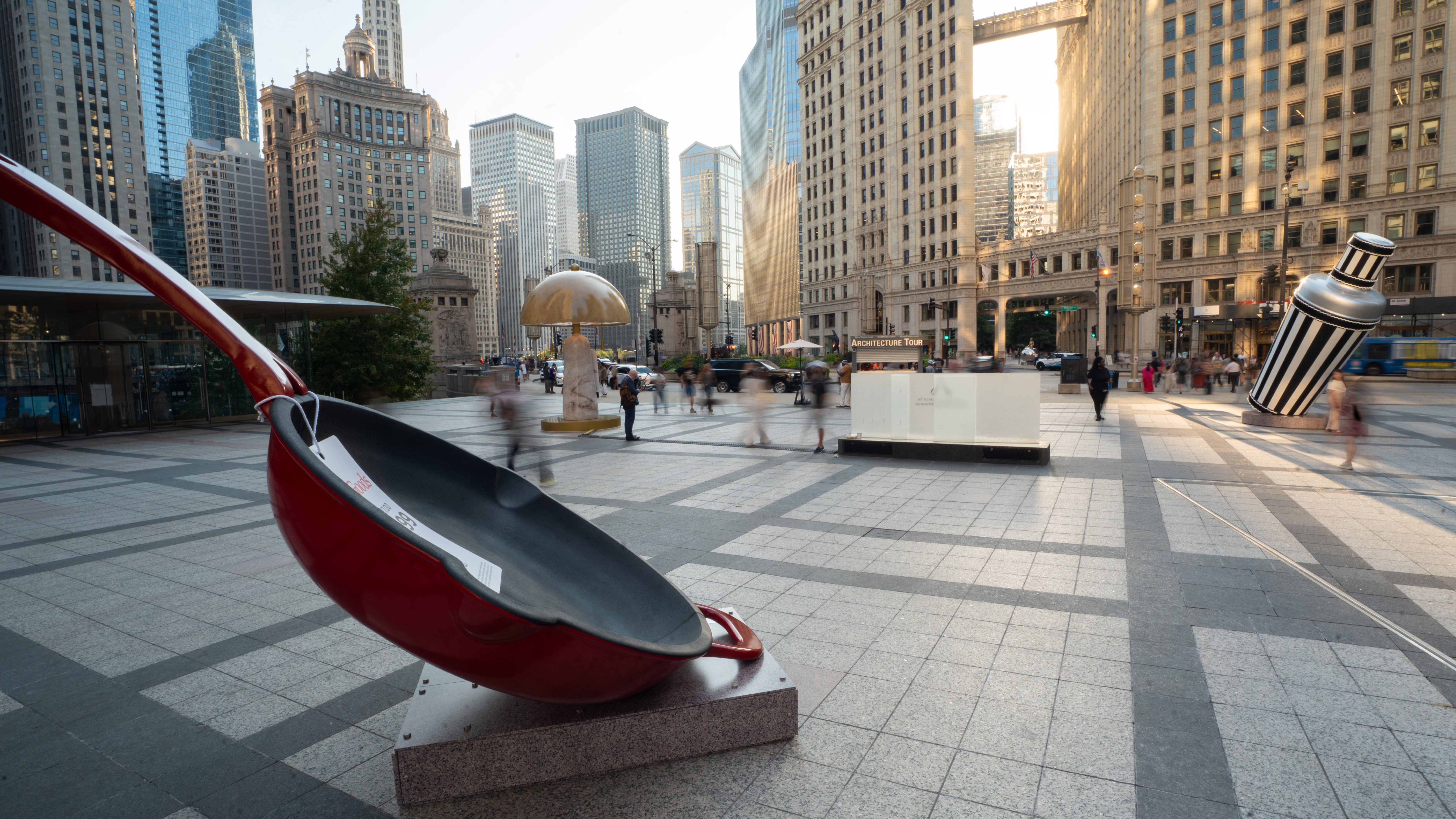
Why Chicago Works For The Activation
Pioneer Court provides HomeGoods with a high-profile setting for an activation designed around visibility and participation.
The location allows the oversized installations to become part of the everyday movement of people through the city.
That matters because experiential OOH works differently from advertising that audiences simply passively consume.
The physical environment gives consumers the opportunity to approach the creative, examine it, photograph it and interact with the brand.
In this case, the Chicago setting becomes more than a backdrop.
It becomes part of the campaign experience.
OOH Meets Experiential Marketing
HomeGoods' campaign demonstrates how outdoor advertising can move beyond a traditional billboard or digital screen.
The installations function as media, creative and experience at the same time.
They attract attention through scale, communicate the brand through recognizable products and create interaction through QR technology.
This combination allows the campaign to operate across multiple touchpoints.
People can encounter the installation in person, photograph it, interact with the QR code and then continue the journey through a mobile landing page and physical retail visit.
That creates a more connected version of OOH where the physical environment becomes the starting point for a broader consumer journey.
A Bigger Way To Shop Differently
At its core, the campaign turns a simple retail truth into a physical spectacle.
You never quite know what you will find at HomeGoods.
Fallon translates that unpredictability into oversized objects that appear where consumers would not normally expect to see them.
The campaign therefore communicates the brand without relying entirely on conventional product advertising.
The products themselves become the creative idea.
Their scale becomes the attention driver.
And the QR interaction gives the audience a reason to take the next step.
It is a retail message expressed through an OOH experience.
Final Thought
HomeGoods' latest activation shows how brands can turn everyday products into memorable outdoor experiences.
By transforming familiar home items into larger-than-life installations, the brand gives its "Never Shop the Same" platform a physical presence that consumers can experience firsthand.
The campaign also demonstrates the value of connecting experiential OOH with a measurable action.
A QR code, a mobile landing page and a Lyft incentive create a clear bridge between seeing the campaign and visiting a store.
For HomeGoods, the idea is simple but effective:
Take the unexpected nature of shopping and make it impossible to miss.

Comments (0)
Join the conversation. Keep it respectful and on-topic.