
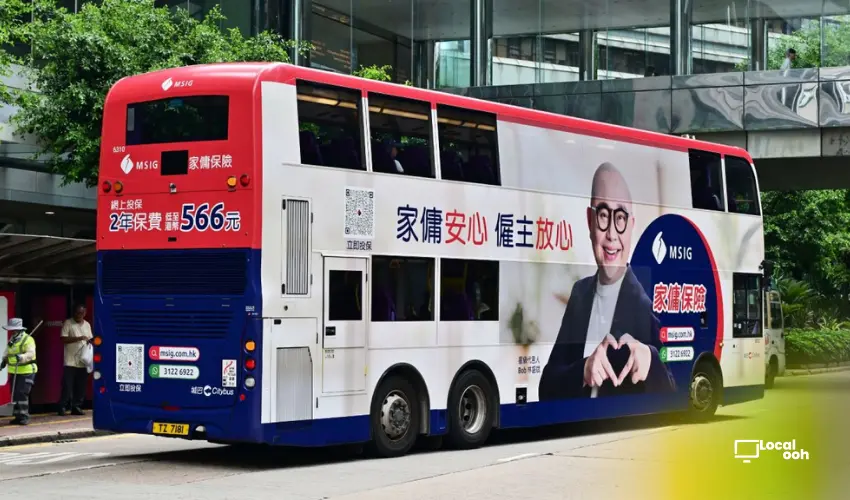
Quick answer: MSIG Hong Kong is back with the second wave of its strategic OOH campaign, using fully wrapped double-decker buses to strengthen brand recall and deliver widespread visibility across the city.
MSIG Hong Kong Returns to the Streets
MSIG Hong Kong has officially launched the second wave of its high-impact out-of-home campaign.
Building on the momentum of its previous rollout, the brand is once again using the bus network to create strong visibility across the city.
The campaign places MSIG directly into Hong Kong’s daily movement, reaching commuters, pedestrians, drivers and city audiences through one of the most recognizable transit formats in the market.
Fully Wrapped Double-Decker Buses
The campaign uses fully wrapped double-decker buses as its main media format.
This gives MSIG a large, mobile canvas that can travel through high-traffic streets, commercial districts and everyday commuter routes.
Unlike static placements, wrapped buses move with the city, creating repeated exposure across multiple neighbourhoods and helping the brand stay visible throughout the day.
A Campaign Built for Sustained Brand Recall
The objective of the campaign is clear: sustained brand recall and widespread urban coverage.
For an insurance brand, visibility and trust are essential. A consistent presence across the bus network helps keep MSIG top of mind as people move through their regular routines.
By returning with a second wave, the campaign reinforces familiarity and strengthens the connection between the brand and the city environment.
Why Bus Wraps Work in Hong Kong
Hong Kong is a dense, fast-moving city where transit media plays an important role in everyday visibility.
Double-decker buses offer height, scale and strong street-level impact, making them ideal for brands that want to be seen repeatedly across busy urban routes.
The format also allows creative to surround the vehicle, turning public transport into a moving brand statement.
From Awareness to Urban Presence
This second wave is not only about launching another campaign. It is about maintaining presence.
By continuing to invest in wrapped buses, MSIG keeps the brand active in public spaces and builds momentum beyond a one-off execution.
The repetition of the campaign across the bus network helps create a sense of reliability, visibility and continuity.
Transit OOH for Insurance Brands
Insurance marketing often depends on trust, recognition and long-term consideration.
Transit OOH supports those goals by keeping the brand visible in real-life environments where people repeatedly encounter the message.
For MSIG, the wrapped bus format creates broad coverage while also making the campaign feel integrated into the everyday rhythm of Hong Kong.
Why This Campaign Works
The campaign works because it uses a bold and familiar city format to build long-term brand visibility.
MSIG Hong Kong is not relying on a single static message. Instead, the brand is using the movement of double-decker buses to extend its reach across multiple urban touchpoints.
By launching a second wave, MSIG reinforces its communication strategy and shows how transit OOH can support both scale and sustained recall.
What Marketers Can Learn From MSIG Hong Kong
- Second-wave OOH campaigns can extend momentum and strengthen brand recall.
- Fully wrapped buses offer mobile scale and repeated urban exposure.
- Transit media works well for brands that need trust, familiarity and everyday presence.
- OOH campaigns become stronger when they are planned as sustained visibility platforms, not one-off placements.
- High-impact bus network rollouts can help brands stay connected to the rhythm of a city.

Comments (0)
Join the conversation. Keep it respectful and on-topic.