

Quick answer: Self-storage facilities should use local OOH when they need more move-in leads from a defined trade area. The best campaigns put a simple storage need, one local proof point, and one action on high-frequency routes near apartments, residential growth, colleges, military bases, and moving corridors. Start with billboard or digital billboard coverage, connect it to a trackable landing page, and measure calls, reservations, branded search, and occupancy lift.
Why self-storage is a strong fit for local OOH
Self-storage is not usually a long research journey. People need space because something changed: a move, renovation, divorce, deployment, new baby, downsizing, business inventory issue, or student transition. The buyer is often close to the facility and needs a practical answer fast.
That makes outdoor advertising useful. A billboard does not need to explain the whole category. It needs to make a nearby facility feel obvious, available, and easy to contact before the buyer searches online or calls a competitor.
Local OOH is especially useful for operators competing in crowded corridors where multiple storage brands appear on the same map. The campaign creates memory before the search happens, so the facility name is already familiar when the buyer compares options.
Best OOH use cases for storage facilities
| Business need | OOH approach | What to measure |
|---|---|---|
| Lease up a new or expanded facility | Digital billboards and route coverage within the trade area | Reservation volume, calls, branded search, occupancy by week |
| Fill climate-controlled units | Message the specific unit type near dense residential and apartment corridors | Unit mix inquiries, landing page visits, call tracking by offer |
| Compete near a busy highway exit | Static billboard presence with a short directional cue | Direct calls, map searches, facility-name searches |
| Capture student or seasonal moving demand | Short flights near campuses, apartments, and transit routes | Promo code use, online reservations, peak-period move-ins |
Where storage billboards should run
The best locations are not always the most expensive downtown boards. Storage buyers usually come from a practical drive radius, so the media plan should prioritize routes people use when they live, commute, shop, or move within that area.
- Apartment corridors: strong for renters who need seasonal or overflow storage.
- Residential growth areas: useful when new homes, renovations, and moves are common.
- Campus routes: valuable for student storage during move-out and summer periods.
- Military or relocation corridors: useful near bases, ports, and major employment hubs.
- Highway exits near the facility: useful when the message can include a short directional cue.
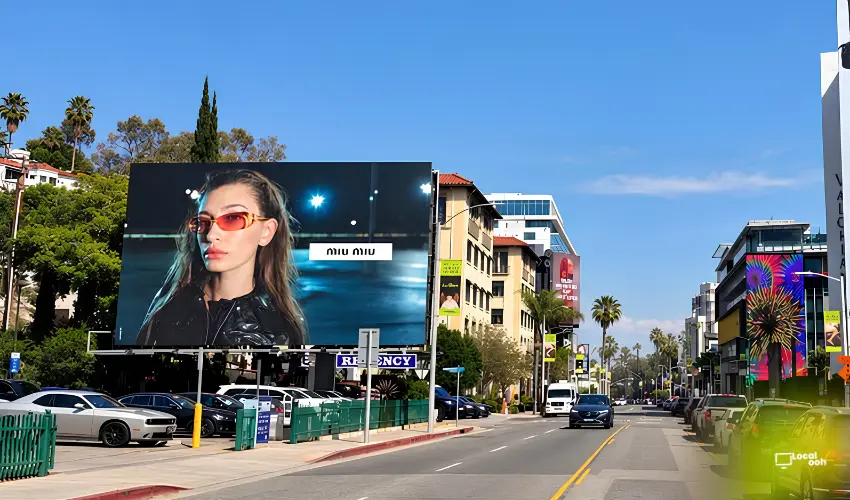
For a market example, review how county-level billboard inventory is organized on a page like billboard advertising in Alameda County. The same planning logic applies in any storage trade area: match the location to the roads your likely customers already use.
Creative that works for storage
Storage creative should be direct. A person driving by does not need a brand manifesto. They need to know that units are available, the location is convenient, and the next step is easy.
- Use one need: "Need more space?" or "Moving soon?" works better than a crowded feature list.
- Name the facility clearly: make the brand or facility name the memory cue.
- Add one location cue: exit, neighborhood, road name, or minutes away.
- Show one offer if needed: first month, online rate, climate control, or vehicle storage.
- Keep the action short: reserve online, call now, or search the facility name.
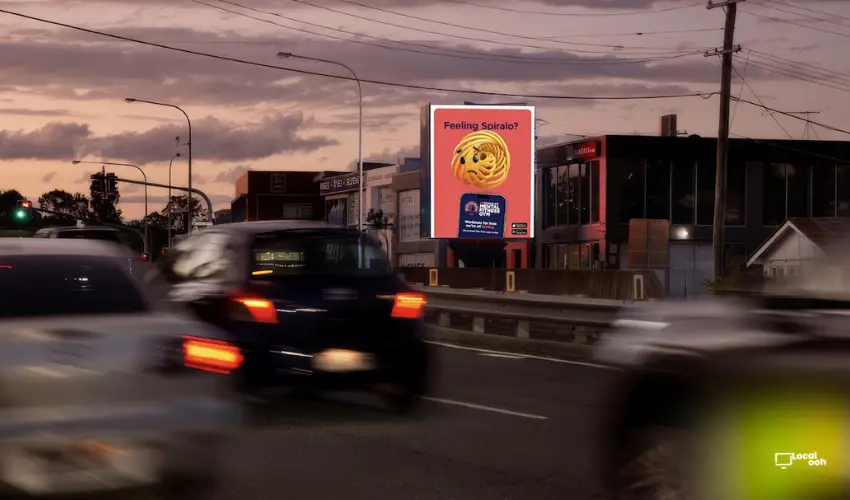
If the campaign uses digital, rotate the message by need state. One creative can push climate-controlled units, another can support student storage, and another can focus on vehicle or business storage. For design rules, see Local OOH's creative best practices.
Recommended campaign structure
A practical launch plan starts with the facility trade area, not with a generic media package. Define the radius, list the most important roads, identify competitors, then select formats that create repeated exposure where the buyer is already moving.
- Map the trade area: mark apartments, campuses, relocation employers, highways, and competitor clusters.
- Choose the format mix: use billboards for route ownership and digital units for flexible offers.
- Build one landing page: mirror the billboard promise and make reservation or calling easy.
- Track by market: use call tracking, UTM links, promo codes, and weekly occupancy comparisons.
- Refresh creative monthly: keep the facility name consistent but rotate the need or offer.
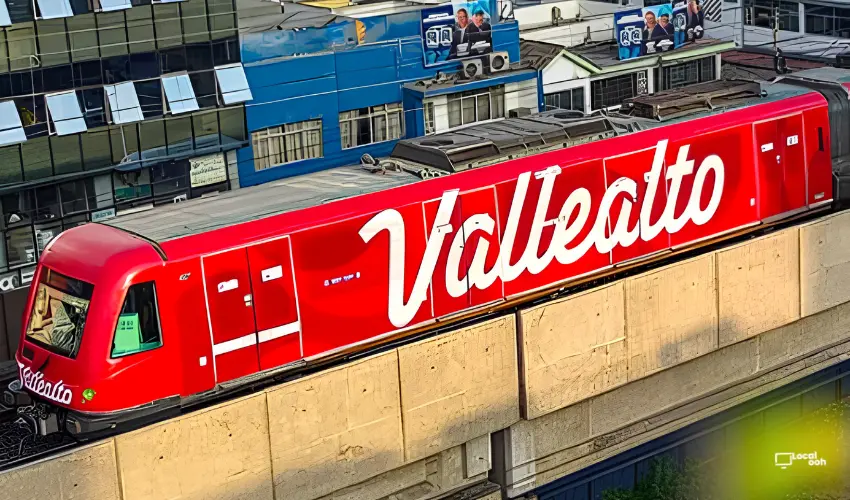
For media planning, compare available options through billboard advertising, transit advertising, and broader market pages such as New York OOH markets.
Budget and buying notes
Storage operators should avoid buying only the cheapest board. A low-cost board outside the trade area can waste budget because the buyer will not drive past better options to reach the facility. Value comes from frequency, proximity, visibility, and a message that matches the unit demand.
For a deeper pricing overview, read Billboard Costs in 2026. For a self-storage campaign, the important question is not only "what does the board cost?" but "does this route influence people who can realistically rent here?"
CTA
If you manage a self-storage facility or multi-location storage brand, contact Local OOH with your markets, facility addresses, occupancy goal, timing, and target unit types. The team can help identify routes and formats that match the trade area.
FAQs
Does billboard advertising work for self-storage facilities?
Yes. It works best when the facility is close to the campaign footprint and the message focuses on a clear storage need, local convenience, and an easy next step.
What should a self-storage billboard say?
Use a short need-based message, the facility name, one location cue, one offer if relevant, and a direct action such as reserve online or call today.
When should storage facilities run OOH campaigns?
Run before peak moving season, student move-out periods, relocation windows, or any time occupancy and unit mix need a local lift.
Which OOH formats fit self-storage marketing?
Billboards, digital billboards, transit formats, and street-level media can all work depending on the facility trade area and the buyer routes.
How should a storage company measure billboard performance?
Use call tracking, promo codes, a campaign landing page, branded search monitoring, online reservations, and occupancy comparisons by week.






Comments (0)
Join the conversation. Keep it respectful and on-topic.