
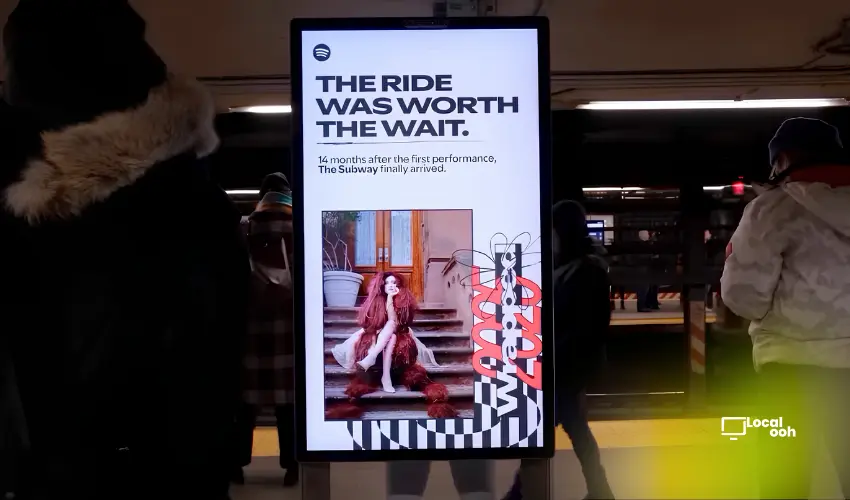
Quick insight: Spotify brought Chappell Roan's bold visual world into the New York City subway, turning an everyday commute into something fans couldn't help but notice.
Bringing Chappell Roan Into The Subway
Spotify has found a way to take Chappell Roan's distinctive visual identity beyond the screen and into one of New York City's most recognizable everyday environments: the subway.
The campaign transforms ordinary transit spaces into an extension of the artist's visual world, creating a moment that feels different from the typical commute.
Instead of asking audiences to seek out the campaign, Spotify places it directly in their path.
The result is a physical experience that connects music, visual culture and everyday city life.

Turning A Commute Into A Fan Moment
The strength of the campaign comes from its ability to interrupt an otherwise familiar routine.
For subway passengers, advertising is part of the environment. But when a campaign is visually distinctive and closely connected to an artist's identity, it can become something people actively want to look at.
Chappell Roan's bold aesthetic gives the campaign an immediate visual presence, helping the subway environment feel less like traditional advertising and more like a fan experience.
That distinction matters because the audience doesn't simply encounter the campaign. They can become part of its distribution.
From The Subway To Social Feeds
The campaign didn't have to stay underground.
Fans and commuters could capture the physical installation, post it online and bring the experience into their own feeds.
This creates a natural connection between physical media and social content.
A person sees the campaign in the subway. They take a photo. They share it. Other people see the post and become familiar with the activation without ever being inside the subway themselves.
That is where physical advertising can gain an additional layer of value: the real-world experience becomes content.

Why IRL Media Still Matters
Digital advertising can reach people almost anywhere, but physical media has one important advantage: it exists in the same space as the audience.
A subway campaign becomes part of someone's actual journey.
When the creative is distinctive enough, that physical encounter can generate a second life online through photos, videos and social posts.
Spotify's activation demonstrates how IRL media can work as both an advertising channel and a source of social content.
Why This Campaign Works
- Brings an artist's visual identity into a highly visible everyday environment.
- Transforms a routine commute into a memorable brand experience.
- Connects music culture with physical advertising.
- Creates content opportunities beyond the original media placement.
- Encourages fans to photograph and share the experience.
- Shows how IRL media can extend naturally into social platforms.

Key Takeaways For Marketers
- Physical advertising can become social content when the creative is distinctive.
- Fan culture can make campaigns more participatory and shareable.
- Unexpected placements can turn ordinary environments into memorable experiences.
- Strong visual identities help campaigns stand out in crowded urban spaces.
- IRL and digital media can work together rather than functioning as separate channels.
Final Thought
Spotify's Chappell Roan campaign shows how a physical advertising experience can travel far beyond its original location.
What starts as a subway encounter can become a photo, a post and eventually part of a much larger cultural conversation.
That's the power of IRL media: creating moments people can't help but share.

Comments (0)
Join the conversation. Keep it respectful and on-topic.