
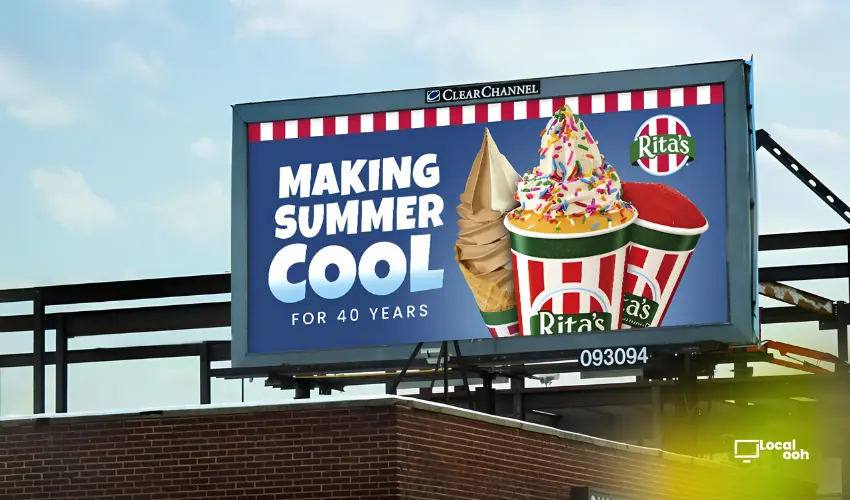
Quick answer: Weather-triggered OOH works when local demand changes because of rain, heat, cold, pollen, snow, storms, or seasonal shifts. The best campaigns connect the condition to one practical action: book service, visit now, order delivery, prepare early, clean the car, cool down, or protect the home. Use digital OOH when the message needs to change quickly, and use static billboards when the seasonal pattern is predictable.
Why weather makes OOH more interesting
Weather creates intent without asking the buyer to search first. A hot week can push HVAC demand. Rain can change restaurant and delivery behavior. Pollen can remind drivers to wash the car. Cold weather can make urgent care, pharmacy, storage, fitness, and home-service messages feel more relevant.
OOH works well in these moments because it is already in the physical path of the customer. A driver sees the message while experiencing the condition the campaign is referencing.
The point is not to make every board reactive. The point is to plan creative and media around predictable moments when the customer already has a reason to care.
Best weather-triggered OOH use cases
| Weather moment | Best-fit advertisers | Message angle |
|---|---|---|
| Heat wave | HVAC, gyms, restaurants, urgent care, beverages, retail | Cool down, book service, hydrate, visit now, order ahead |
| Rain or storms | Delivery, insurance, home services, storage, restaurants | Stay dry, prepare early, protect the home, order in |
| Pollen or road grime | Car washes, auto detailers, pharmacies, allergy clinics | Clean the car, breathe easier, get relief, stop nearby |
| Cold snap | Urgent care, pharmacy, HVAC, retail, restaurants | Stay warm, get care, book heat service, pick up essentials |
Where these campaigns should run
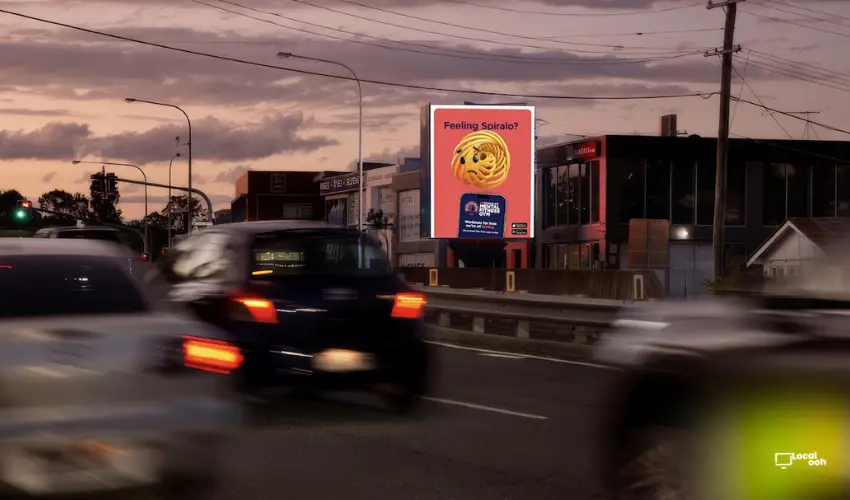
The best weather-triggered placement depends on what the weather changes. For car washes, routes near the wash and commuter corridors matter. For HVAC, residential routes and homeowner-heavy areas matter. For restaurants, retail and commute patterns matter.
- Commuter corridors: useful when the weather affects drivers immediately.
- Retail routes: strong for grocery, pharmacy, restaurant, and preparation messages.
- Residential corridors: relevant for HVAC, insurance, storage, and home services.
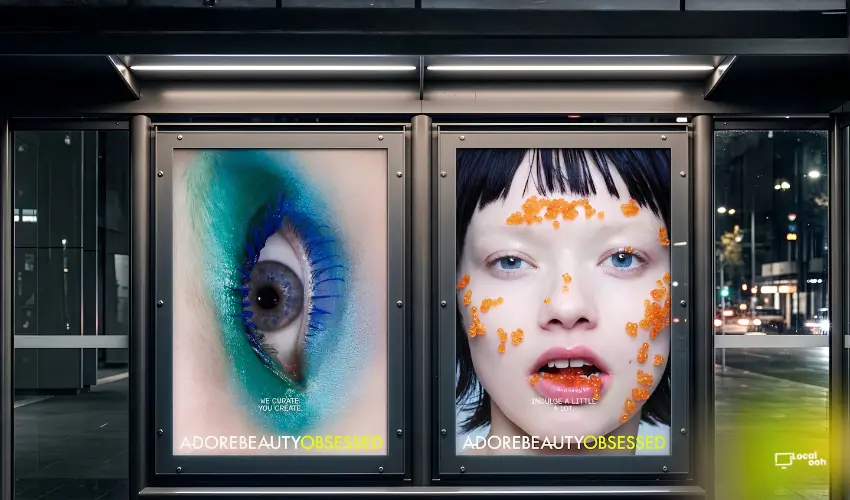
- Transit shelters: useful when pedestrians are directly exposed to heat, rain, or cold.
- Roads near the business: helpful when the action is immediate and location-based.
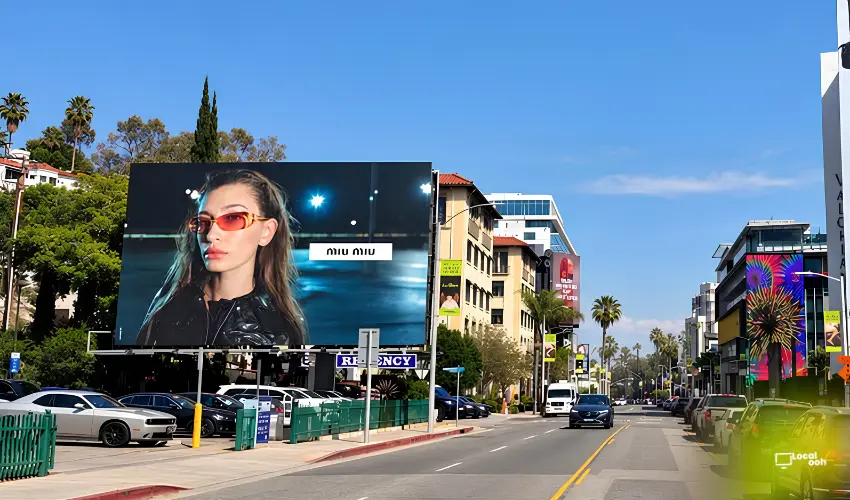
For market examples, review billboard advertising in Alameda County or broader routes in New York OOH markets. The route should match the weather-driven behavior you expect.
Static vs digital OOH for weather timing
Digital OOH is the cleaner fit when messages need to rotate quickly. A restaurant can change lunch, delivery, and heat-wave creative. An HVAC company can push AC service during heat and heating service during cold. A pharmacy can rotate allergy, cold, and flu messages.
Static billboards still work when the seasonal pattern is predictable. A car wash can plan around pollen season. A storage facility can plan around storm season or moving season. A retailer can plan around summer heat or winter travel.
Creative rules for weather-triggered OOH
- Name the moment: heat, rain, pollen, storm prep, cold snap, or seasonal reset.
- Give one action: book, visit, order, call, stop in, scan later, or search the brand.
- Keep the brand clear: reactive creative is useless if people remember the weather but not the advertiser.
- Avoid over-promising: do not imply guaranteed outcomes from weather or service claims.
- Prepare variants early: do not wait until the forecast changes to approve creative.
Before launch, compare the design against Local OOH creative best practices so the condition, brand, and CTA are readable fast.
Campaign structure
- Choose the trigger: heat, cold, rain, pollen, storm prep, snow, or a predictable seasonal shift.
- Define the behavior: what should the customer do differently because of that condition?
- Select formats: use billboard advertising for route recall and transit advertising for street-level exposure.
- Prepare creative variants: base message, trigger message, fallback message, and offer-specific message.
- Measure by window: compare calls, orders, bookings, visits, and search during triggered days against normal days.
Budget and measurement notes
Weather-triggered OOH should be measured around the relevant window. A heat-wave campaign should not be judged the same way as a month-long brand campaign. Look at calls, orders, visits, booking rate, and revenue during the days when the condition was active.
For pricing variables, read Billboard Costs in 2026.
CTA
If your business has demand that changes with weather, seasonality, or local conditions, contact Local OOH with your market, trigger, service area, creative idea, and timing.


Comments (0)
Join the conversation. Keep it respectful and on-topic.