
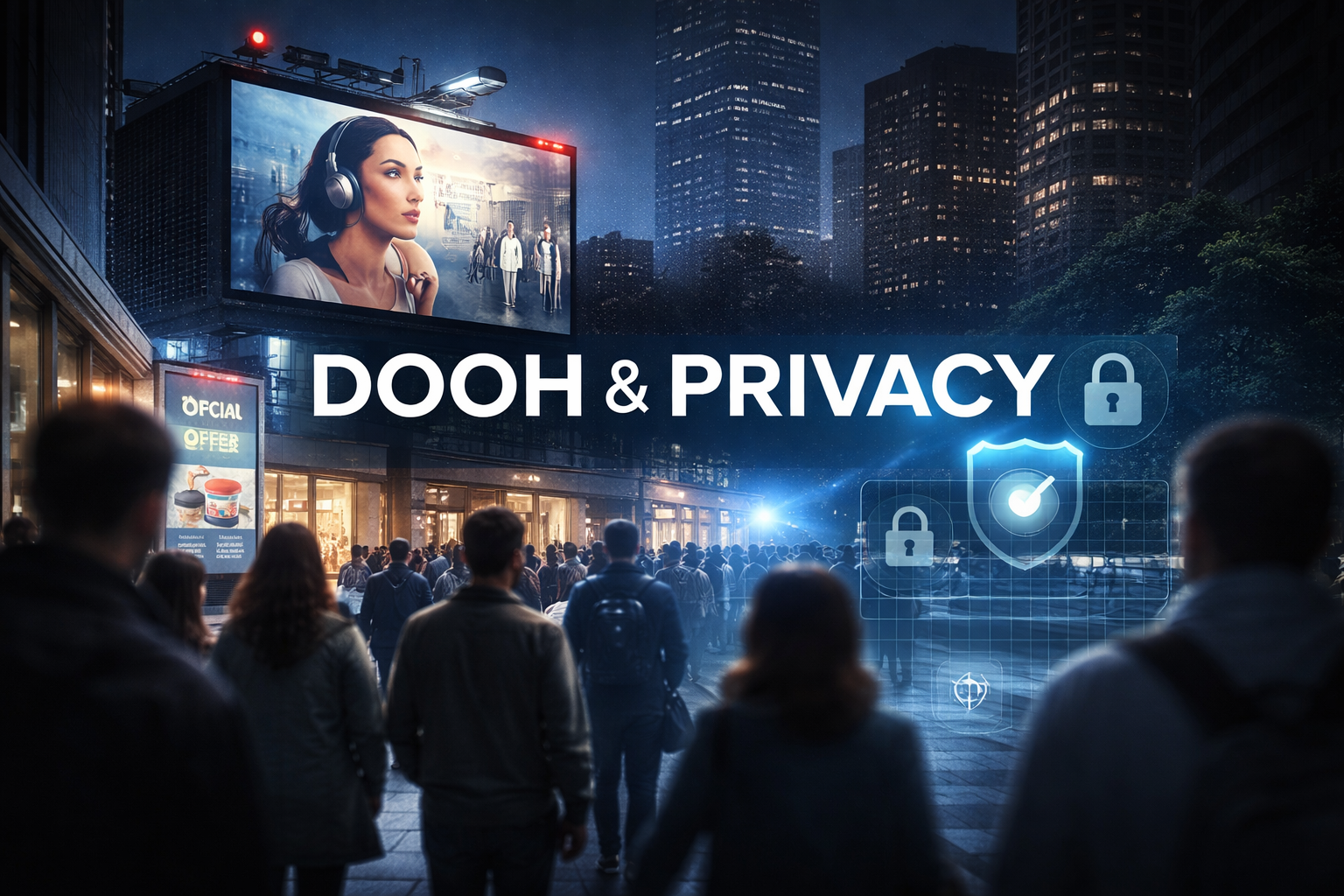
The new risk: measurement that feels like surveillance.
The DOOH industry is moving toward stronger verification and accountability—but public tolerance is not unlimited.
In December 2025, reporting highlighted backlash in the UK around digital screens in residential buildings that raised concerns about tracking and surveillance potential.
Whether or not certain features are active, perception becomes reality: if people feel watched, the brand and the channel both lose trust.
Why the industry is pushing verification anyway
Advertisers want:
- proof campaigns ran as promised
- confidence in audience delivery
- stronger attribution narratives
This pressure is exactly why measurement standards have been getting formalized—like the IAB’s DOOH Measurement Guide (July 2025), built to reduce fragmentation and align buyers/sellers on evaluation frameworks.
The 2026 privacy-first DOOH playbook
Here’s how to pursue measurement without creating backlash.
1) Prefer “verification without identification”
Use methods that verify delivery without personal-level analysis:
- playback verification logs
- device health checks
- independent proof-of-play auditing
- aggregated exposure modeling
2) Avoid sensitive environments by default
The backlash risk increases sharply in:
- residential lobbies
- healthcare environments
- schools
- any semi-private space with limited choice
If it’s a place where people can’t “opt out,” you need a higher ethical bar.
3) Be radically transparent
If any sensing technology is present:
- disclose it clearly
- explain what it does and doesn’t do
- publish data handling principles
“Hidden measurement” is what triggers the strongest negative reaction.
4) Set strict vendor rules
Require partners to document:
- what data is collected
- retention windows
- aggregation thresholds
- whether biometric processing occurs
- whether consent is required and how it’s captured
5) Use incrementality tests instead of invasive tracking
You can prove impact with:
- geo holdout tests
- market-level lift studies
- search lift comparisons
- store-visit lift (aggregated)
These methods often deliver strong confidence without creepy execution.
The core insight: trust is now part of media quality
In 2026, “premium DOOH” isn’t only location and screen size. It’s also:
- governance
- transparency
- privacy-safe measurement
Because once the public narrative becomes “surveillance billboard”, everyone pays the cost—brands, operators, and the entire channel.
Want a privacy-first DOOH measurement plan?
Tell us your target markets, formats, and measurement goals—and we’ll recommend verification and reporting options that protect trust while still proving impact.




Comments (0)
Join the conversation. Keep it respectful and on-topic.