
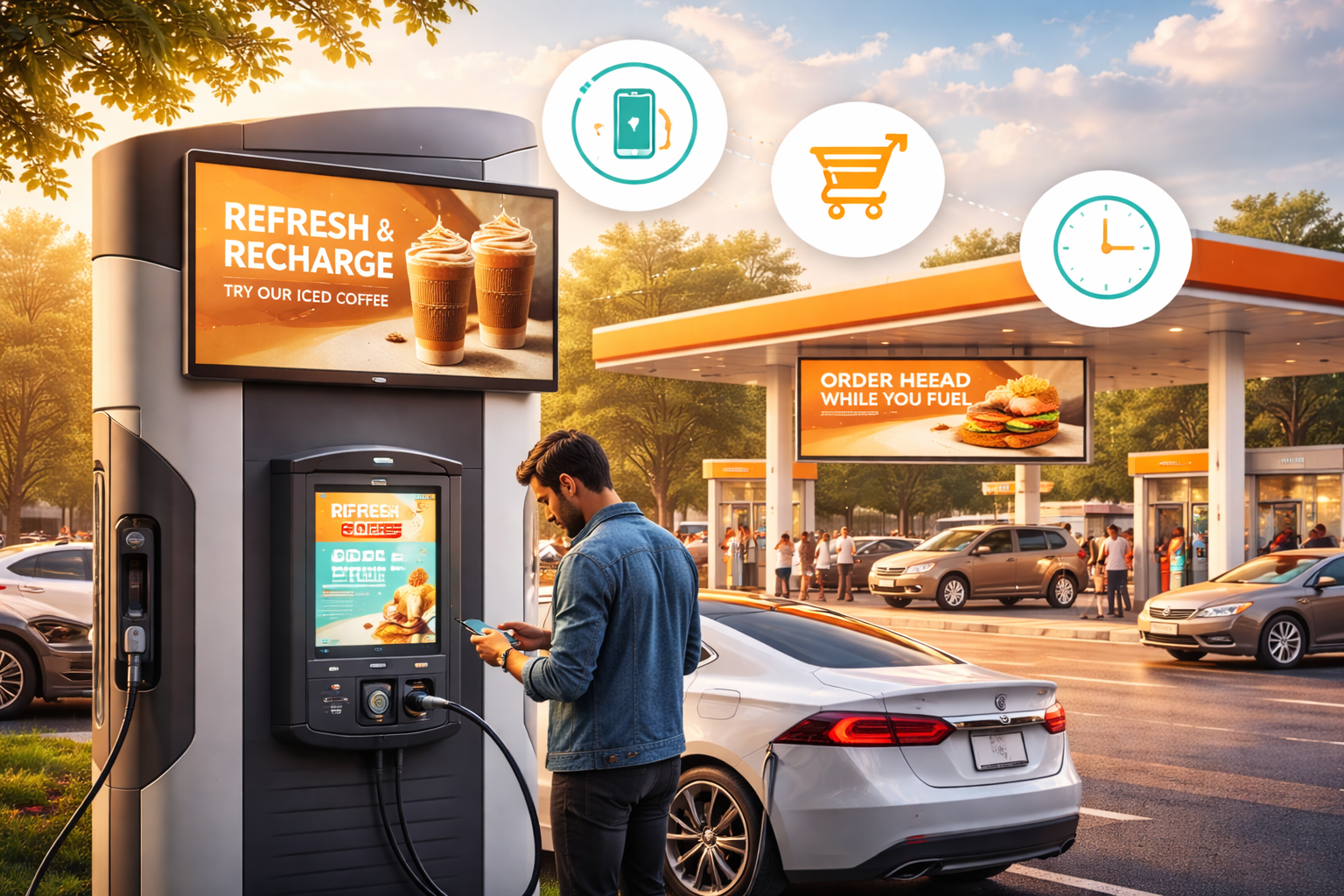
Dwell time is the new premium.
Most media competes for seconds. EV charging competes for minutes.
That’s why EV charging stations and gas forecourts are emerging as a meaningful DOOH environment:
- People are stationary
- Phones are in hand
- The setting is transactional (snacks, coffee, convenience)
- Attention is higher than drive-by environments
What makes forecourt media different
Forecourt DOOH sits at the intersection of:
- mobility
- retail convenience
- high dwell windows
- predictable context (refuel / charge)
This makes it ideal for:
- QSR and delivery apps
- beverages and snacks
- auto services
- retail and loyalty programs
- local businesses
How to plan EV/forecourt DOOH effectively
1) Plan by routes, not cities
Forecourt networks should be planned around:
- commuting corridors
- long-distance routes
- weekend travel paths
2) Use “need-state” creative
The forecourt moment is unique:
- hunger
- fatigue
- urgency
- low patience
Your creative should be:
- simple
- benefit-led
- immediately actionable
3) Build sequential messaging
Forecourt DOOH can pair perfectly with:
- mobile retargeting
- paid search capture
- app install campaigns
Measurement ideas that actually work here
- QR scans and short-link visits (high dwell makes it realistic)
- Lift in store purchases where co-located
- App installs in exposed areas
- Search lift near route clusters
Bottom line
EV charging DOOH isn’t just “another screen.” It’s a high-attention environment with built-in dwell—one of the most valuable commodities in 2026 media.

Comments (0)
Join the conversation. Keep it respectful and on-topic.