
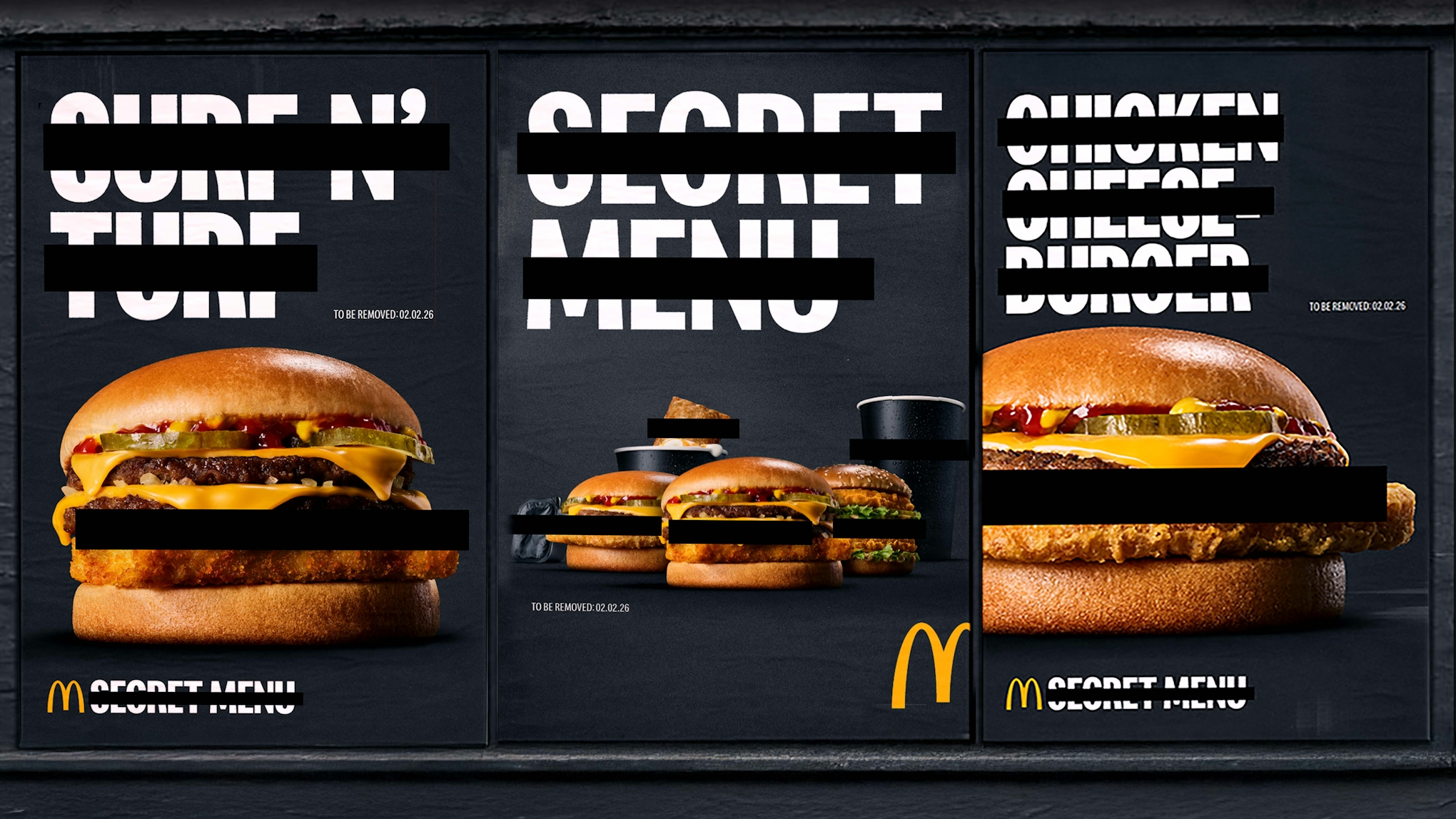
Quick take: McDonald’s made its long-rumored Secret Menu real—and marketed it like a secret, using hidden cues, subtle OOH, and “found” moments to spark curiosity and sharing.
For years, “the McDonald’s Secret Menu” lived in the same space as urban myths: everybody had heard of it, nobody could confirm it, and somehow someone always knew someone who had ordered it. It wasn’t a corporate product. It was a fan-made ritual—built from combos, hacks, and insider-sounding instructions passed around online.
Now McDonald’s has done what most brands hesitate to do: it didn’t fight the myth, it validated it. The Secret Menu went from rumor to official, and the campaign didn’t treat it like a normal product launch. It treated it like something you weren’t supposed to find.
The internet built it. McDonald’s stamped it.
What makes this move smart isn’t the food—it’s the cultural handoff.
McDonald’s didn’t pretend it invented the behavior. It recognized what customers were already doing: remixing ingredients into custom combinations, naming them, filming them, and spreading them like “insider” knowledge. By formalizing those fan behaviors, the brand effectively said:
“We see you. And yes, it’s real.”
That kind of acknowledgement turns customers from consumers into collaborators—without forcing a “community” narrative that feels corporate.
What’s on the official Secret Menu?
The official drop centers on fan-favorite combinations that have circulated for years. Think of it as McDonald’s taking the most repeated “hacks” and giving them a legitimate home.
Items like:
- Surf N’ Turf
- Chicken Cheeseburger
- Espresso Milkshake
…move from social chatter to something you can actually order without feeling like you’re trying to trick the cashier.
But the bigger product here is the idea: McDonald’s is turning fan creativity into an official “menu layer” that feels like membership.
The launch strategy: don’t announce it—let people uncover it
A typical brand would blast this with a giant headline: “INTRODUCING THE SECRET MENU.”
This campaign went the opposite direction. It engineered curiosity.
Early momentum wasn’t driven by mass awareness—it was driven by confirmation hunting. Instead of telling everyone immediately, the campaign planted signals that made audiences feel like they were discovering something that wasn’t meant for them.
That meant:
- cryptic social hints that felt like clues
- creator-driven “leaks” that played into the mythology
- hidden details inside other posters (the kind people only notice if they’re already looking)
- in-restaurant screens and kiosks that “glitched” briefly, flashing Secret Menu moments and then disappearing
In other words: the media behavior matched the product story. If it’s a secret, it shouldn’t be served like a press release.
Why “secrecy” is such a powerful media mechanic
There’s a simple psychological loop this campaign exploits perfectly:
- If it feels hidden, it feels valuable
- If it feels valuable, people want proof they found it
- Proof becomes sharing
- Sharing spreads the myth—and makes more people look
That’s the real genius: the audience does the distribution because the campaign turns them into collectors. Seeing the Secret Menu doesn’t feel like “I saw an ad.” It feels like “I found something.”
And found media travels differently.
OOH as storytelling, not placement
This is where OOH shines. Outdoor is uniquely good at “discovery-led” storytelling because the environment itself becomes part of the narrative.
When OOH executions are designed to be subtle, physical, and easy to miss unless you’re paying attention, they create a reward loop:
- Those who notice feel like insiders
- Those who don’t notice hear about it from someone else
- Curiosity spreads faster than exposure
Instead of “reach,” the campaign builds search behavior—people actively trying to confirm what they saw.
What brands can learn from this campaign
1) Don’t over-own the community
If consumers built the behavior, don’t rewrite history. Validate it.
2) Let the media format reflect the message
A “secret” should not be marketed like a standard menu item.
3) Make people work a little
Discovery creates story. Story creates sharing.
4) OOH can be a trigger, not just a billboard
Outdoor can start the conversation—then social finishes it.
Video
FAQs
What is McDonald’s Secret Menu?
It’s a newly official menu made from fan-created combinations that have circulated for years, now recognized and packaged by McDonald’s.
Who developed the campaign?
Leo UK created the campaign with McDonald’s.
Why didn’t McDonald’s launch it with a big announcement?
Because the strategy was built around mystery: hints, subtle confirmations, and “found” moments that made discovery feel earned.
How does OOH strengthen the concept?
OOH can act like hidden media—details, placements, and executions that feel like clues rather than ads, turning the city into part of the story.
What’s the key takeaway for marketers?
Mystery is a growth engine when it’s authentic. When the audience feels like they uncovered something, they share it as proof—not promotion.
Summary
By making the Secret Menu official, McDonald’s turned a long-running fan myth into a real, orderable offering—then marketed it through the same mechanics that built the myth in the first place: curiosity, hidden cues, and discovery-led OOH. Instead of forcing awareness, the campaign invited people to look closer, confirm, and share—proving that sometimes the fastest way to spread a message is to make it feel like it was never meant to be found.

Comments (0)
Join the conversation. Keep it respectful and on-topic.