
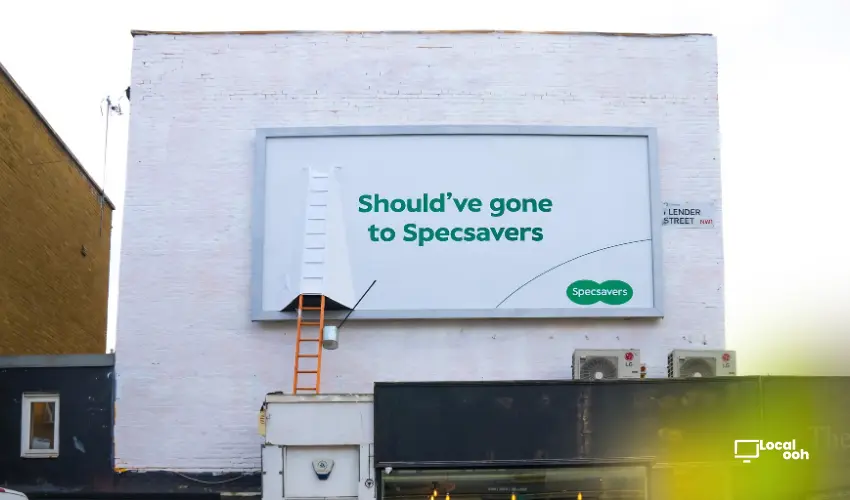
Quick answer: Competitor conquesting with billboards and local OOH works when a brand wants to win attention near rival locations, shared customer routes, or decision-heavy trade areas. The strongest campaigns do not attack competitors directly. They make your own advantage obvious: closer location, faster service, better availability, stronger offer, easier booking, or a reason to switch. Measure branded search, calls, visits, forms, offer use, and sales by geography.
Why conquesting belongs in local OOH
Most local buyers do not make decisions in a spreadsheet. They make them on routes: driving to work, passing retail centers, approaching a competitor, searching on a phone, or remembering a brand they have seen repeatedly. OOH gives you visibility in that physical decision path.
Conquesting does not mean negative advertising. In most cases, the better play is to make your own value impossible to miss. A car wash can own the road before a rival entrance. A dental group can appear on the route to competing practices. A storage brand can show up near apartment move-out corridors. A restaurant can be visible before drivers reach a crowded food corridor.
The goal is not to be clever for one week. The goal is to become the remembered option when the buyer is already in-market.
Good conquesting use cases
| Scenario | OOH approach | What to measure |
|---|---|---|
| A competitor dominates a retail corridor | Run billboards before the decision point with a clear reason to compare | Branded search, store visits, calls, sales by ZIP code |
| Your location is easier to reach | Use directional creative near routes where customers pass both options | Map searches, location visits, offer redemptions |
| You have better appointment availability | Promote same-week booking, walk-ins, or fast service near competitor routes | Calls, booking forms, appointment volume, landing page visits |
| You are launching into a crowded market | Own the highest-intent approaches before and after rival locations | Direct traffic, search lift, first visits, new customer count |
Where conquesting placements should run
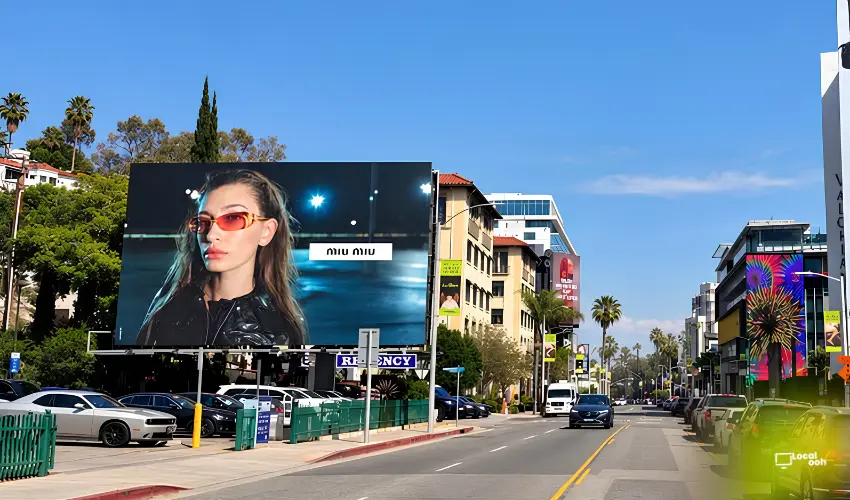
The right placement is not always the largest billboard. It is the placement that appears before the buyer reaches a decision point. Start with routes, not media units.
- Before competitor entrances: useful when your offer is easier, closer, faster, or cheaper to try.
- Shared retail corridors: strong for restaurants, gyms, urgent care, car washes, jewelers, and local services.
- Commuter routes into the trade area: useful for repeated exposure before the search happens.
- Apartment and move-out routes: strong for storage, movers, laundromats, and home services.
- Courthouse, medical, or campus routes: relevant for legal, healthcare, education, and professional services.
For market planning examples, review New York OOH markets or billboard advertising in Alameda County. The important question is where the buyer can realistically choose you instead.
Creative rules for conquesting
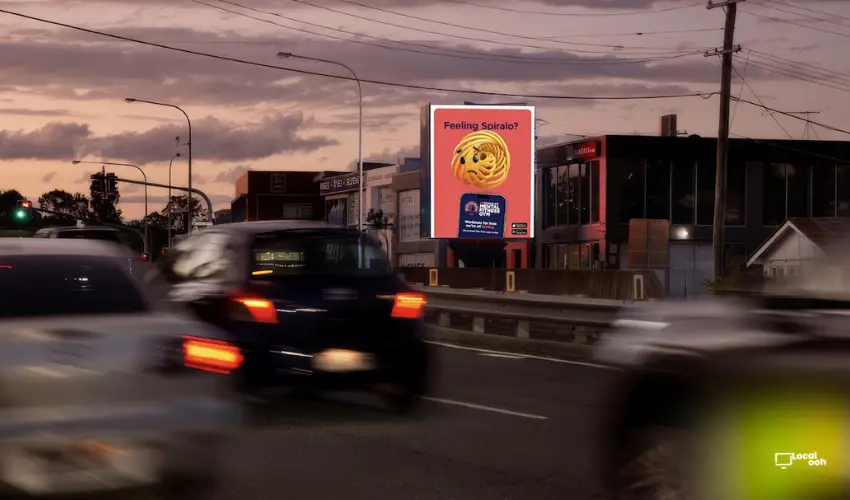
Conquesting creative should be confident, not messy. If the board feels like an inside joke, it will usually miss the buyer. If it makes one practical advantage clear, it has a better chance to work.
- Lead with your advantage: closer, faster, open late, same-week, new location, better route, easier booking, or stronger offer.
- Avoid unsupported competitor claims: focus on what you can prove about your own brand.
- Use geography: neighborhood, exit, road name, minutes away, or shopping center cue.
- Keep the action short: call, book, search, visit, scan later, or stop in today.
- Make the brand name dominant: conquesting only works if people remember who offered the alternative.
Before final art, compare the board against Local OOH creative best practices so the name, advantage, and action survive real road speed.
Campaign structure
- Map the competitor set: locations, routes, trade areas, customer neighborhoods, and decision points.
- Pick one claim lane: convenience, availability, value, location, specialist service, or local trust.
- Select formats: use billboard advertising for route ownership and transit advertising for dense urban corridors.
- Build tracking: short URL, call tracking, offer code, CRM source, branded search baseline, and location reporting.
- Review by geography: compare demand around exposed routes against similar locations without media.
Budget and measurement notes
Conquesting budgets should be judged by the size of the opportunity, not just the cost of media. If a competitor corridor contains high-value customers, a focused OOH campaign can be more useful than broad reach outside the buying zone.
Track branded search, direct traffic, calls, form fills, offer redemptions, sales by location, ZIP-code demand, and store visit trends. For pricing variables, read Billboard Costs in 2026.
CTA
If your brand needs to win demand near competitors or high-intent routes, contact Local OOH with your market, competitor corridors, locations, offer, and timing.


Comments (0)
Join the conversation. Keep it respectful and on-topic.