
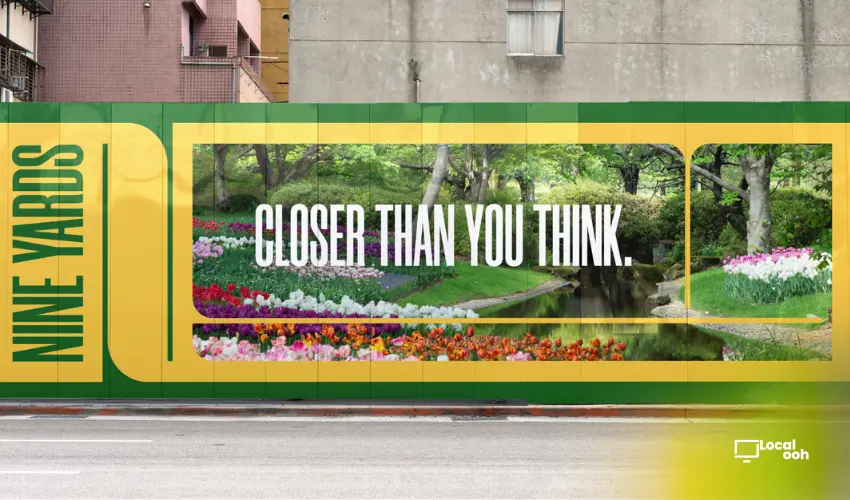
Quick answer: Halo designed the naming and visual identity for Nine Yards, a new social destination in Johannesburg that blends architecture, branding and culture into one flexible experience-driven environment.
A Different Kind Of Social Destination
Nine Yards is not designed like a traditional shopping or lifestyle development.
Located in Johannesburg’s Rosebank district, the space was created as a walkable green town square where food, wellness, lifestyle, art and culture naturally coexist.
Instead of relying on loud visuals or spectacle, the destination focuses on atmosphere, movement and human interaction.
That philosophy also shaped the branding system developed by independent creative agency Halo.
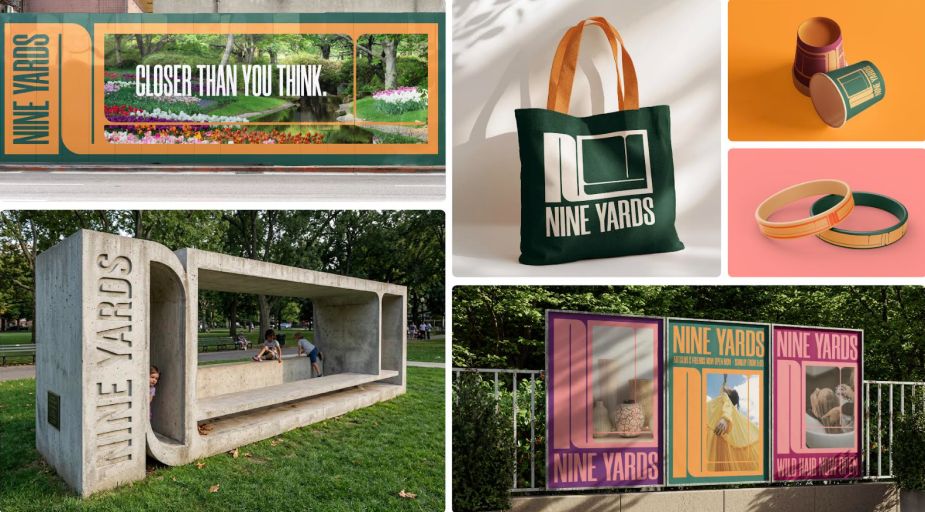
The identity was designed to feel less like advertising and more like part of the architecture itself.
The Meaning Behind The Name
The name “Nine Yards” carries two meanings simultaneously.
First, the destination physically combines nine separate plots into one unified precinct.
Second, it references the phrase “going the whole nine yards,” associated with completeness, generosity and doing something properly.
Together, both meanings create a name that feels grounded in both physical space and emotional experience.
The branding itself became an extension of that idea.
A Brand Built Like Architecture
One of the biggest challenges was designing an identity flexible enough to contain multiple experiences under one coherent system.
The answer came directly from the physical structure of the space.
Just as the nine plots fit together within a larger city block, the visual identity expands and contracts depending on context while maintaining balance and structure.
At the center of the system is a hollowed-out core that functions like a visual window.
Rather than overpowering the experience, the identity reveals what exists inside it.
The result feels calm, architectural and highly adaptable.
Designed To Hold Multiple Experiences
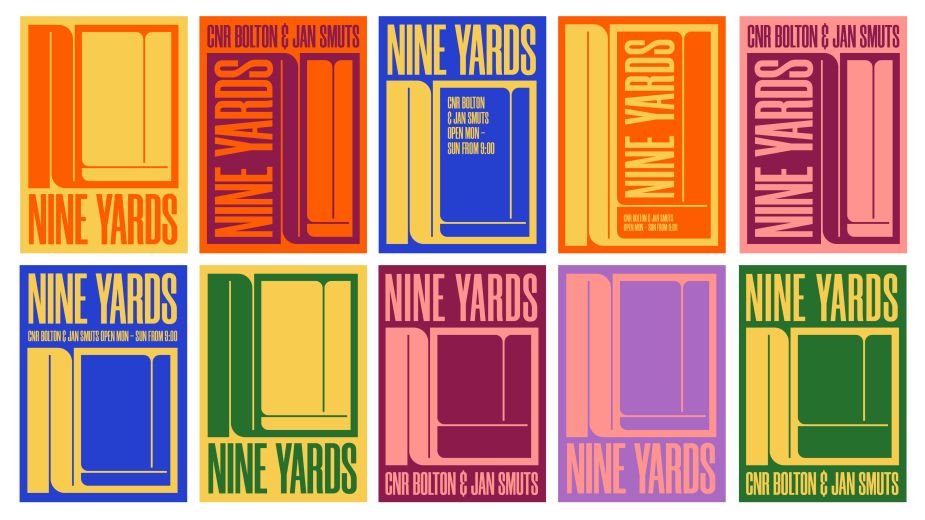
Unlike traditional branding systems focused on consistency above all else, Nine Yards was intentionally built to flex.
The identity needed to support:
- Restaurants and cafés.
- Wellness spaces.
- Retail experiences.
- Art and cultural events.
- Future additions to the precinct.
Every element was designed to work comfortably across signage, digital environments, wayfinding systems and physical touchpoints without losing coherence.
That flexibility allows the destination to evolve naturally over time.
Branding That Doesn't Compete For Attention
One of the most interesting aspects of the project is its restraint.
Many modern developments rely on loud branding and highly commercial aesthetics designed to dominate attention immediately.
But Nine Yards takes the opposite approach.
The identity quietly supports the environment instead of overpowering it.
It creates conditions for experiences to happen naturally.
That subtlety makes the branding feel more intelligent and emotionally connected to the space itself.

A Shift In How Social Spaces Are Designed
Nine Yards reflects a broader cultural shift happening within urban environments.
Instead of designing spaces purely for visual impact or social media moments, projects like this focus on:
- Walkability.
- Comfort.
- Atmosphere.
- Community.
- Slow discovery.
The destination rewards people who spend time there rather than demanding immediate attention.
The branding follows the exact same philosophy.
The strongest identities are not always the loudest. Sometimes they quietly shape how a place feels.
Why The Project Stands Out
The Nine Yards identity demonstrates how branding can function as part of the built environment rather than simply sitting on top of it.
By treating identity like architecture, Halo created a system that supports culture, movement and human interaction without overwhelming them.
The project proves that modern branding does not need to shout to become memorable.

Comments (0)
Join the conversation. Keep it respectful and on-topic.