
Quick Answer: JCDecaux Transport and MTR Corporation’s “Now to Next” summit is a signal that airport and rail OOH are entering one of their most innovative phases. The premium advantage of these environments—high attention and dwell time—is staying the same. What’s changing in 2026 is how buyers can access it: smarter packaging, programmatic options like pDOOH, and sustainability initiatives that increasingly influence global procurement.
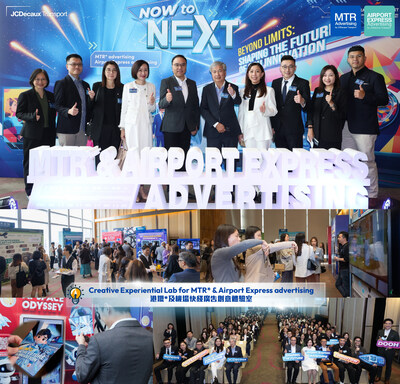
On January 30, 2026, JCDecaux Transport and MTR Corporation hosted a Media Sales Summit focused on the future of advertising across the MTR network and Airport Express in Hong Kong. The theme—“NOW to NEXT: Beyond Limits”—framed the message clearly: innovation in transit and airport media is accelerating, and the platforms are evolving into more data-driven, efficient, and interactive ecosystems.

Why Airports and Rail Still Deliver Premium Attention
The hidden superpower of airports and major rail systems is captive time. People are waiting, moving through gates, scanning signs, and navigating unfamiliar spaces. That creates a natural attention lift compared to a drive-by moment. These environments are ideal for brand storytelling that needs more than a glance, premium positioning that requires trust, and sequential messaging that follows a traveler across touchpoints.
Why “Travel Mode” Makes Messages Stick Better
Context improves recall. When someone is in travel mode, they’re planning, purchasing, anticipating, and often more receptive to information. That’s why airport OOH remains top-tier for finance, tech, luxury, tourism, and global consumer brands—categories where perception and confidence matter as much as reach.
What pDOOH and Innovation Unlock for Buyers in 2026
1) More agility without losing premium context
Programmatic DOOH introduces flexible buying and faster creative swaps—useful for travel, events, match-day moments, and time-sensitive offers—while staying inside high-attention environments.
2) Smarter packaging built around journeys
Modern transit media is increasingly sold as journey-based circuits: station clusters, line corridors, gateway zones, and airport pathways. This packaging improves planning logic (you’re buying a path, not a poster) and makes reporting clearer.
3) Sustainability becomes part of the media brief
Green initiatives are no longer “nice to have.” For many global advertisers, sustainability is becoming a procurement requirement. Media owners that provide credible green options can reduce friction in approvals and unlock larger budgets.
How Brands Should Plan Airport and Rail OOH Right Now
- Map the journey: entry → movement → dwell → exit (design touchpoints to match each phase).
- Use sequential creative: awareness first, then offer, then reminder.
- Connect to mobile: search capture, store locator, and retargeting for measurable lift.
- Demand standards: proof-of-performance, clear posting rules, and consistent reporting cadence.
Bottom Line: Premium Environments, Modern Buying Options
The “Now to Next” message is simple: airport and transit OOH are modernizing fast—adding pDOOH, new products, and sustainability layers—while keeping the premium advantage of real-world, high-attention environments. For B2B buyers in 2026, this category is becoming easier to plan, easier to optimize, and more aligned with modern expectations of accountability.
Source: PR Newswire release on the “MTR and Airport Express advertising Media Sales Summit – NOW to NEXT: Beyond Limits” (Jan 30, 2026).


Comments (0)
Join the conversation. Keep it respectful and on-topic.